Malpelo: The Everest of Diving
- August 7, 2026
Text and photographs by Alejandro Balaguer / Fundación Albatros Media
Isolated in the middle of Colombia’s Pacific Ocean, Malpelo is one of the planet’s most extraordinary marine sanctuaries. Amid challenging currents and unforgettable encounters with vast schools of sharks, one expedition reveals why this remote paradise is considered the Everest of diving.
Guardians of the Pacific: An Alliance to Protect the Ocean
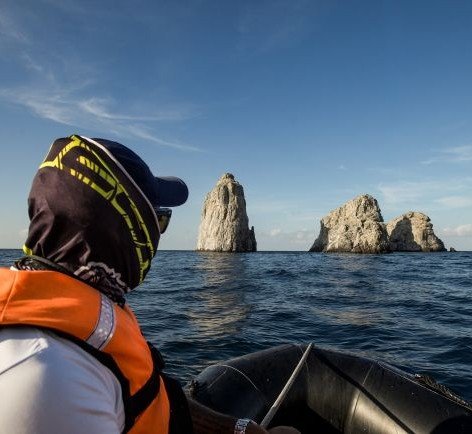
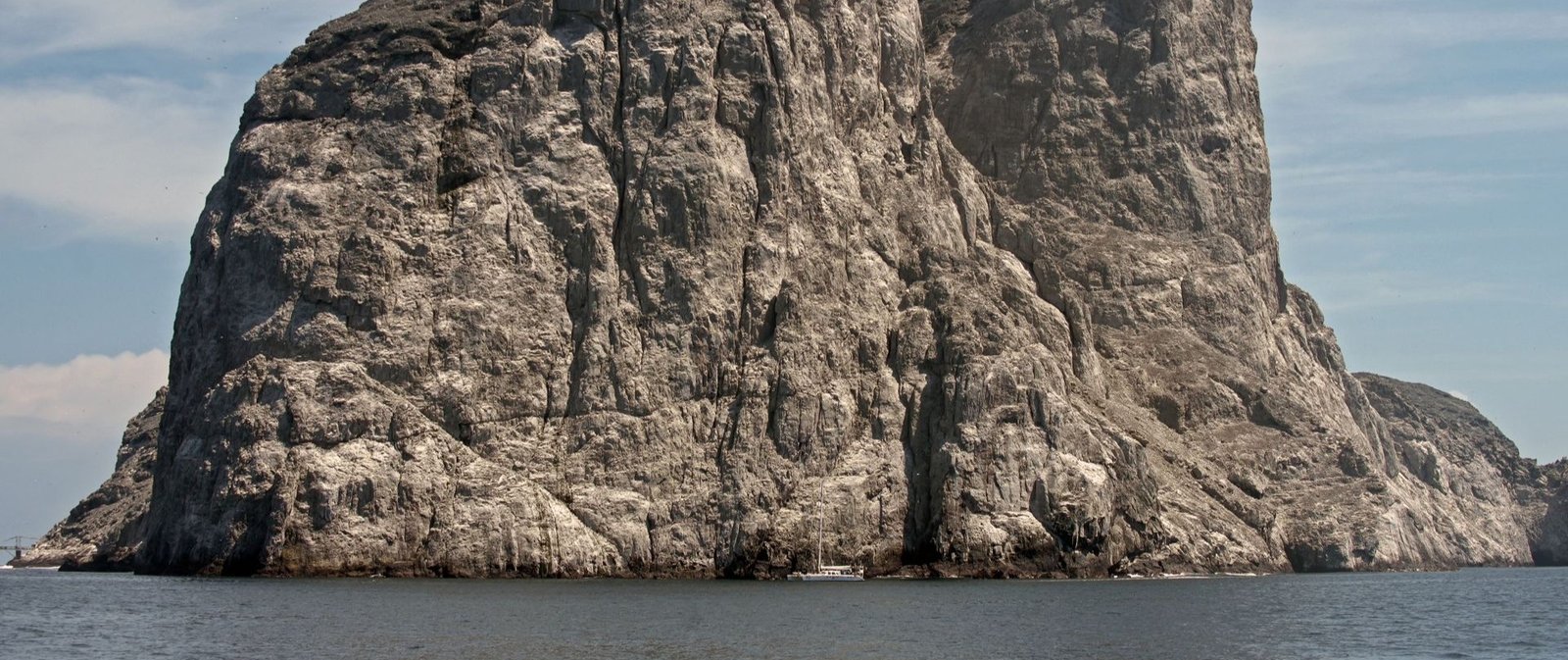
Five hundred kilometers off Colombia’s Pacific coast, a solitary catamaran appears dwarfed by the towering rocky island that rises dramatically above the ocean’s surface. Rugged, wild, and remote, the Malpelo Flora and Fauna Sanctuary dominates the horizon. Moored beside it is the floating base of Colombia’s park rangers, the unsung guardians who protect this extraordinary island. After a 30-hour voyage aboard the MV Ferox, a vessel specially outfitted for diving expeditions, we have finally arrived.
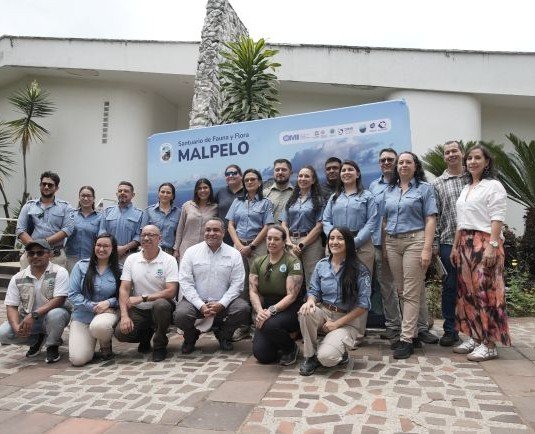
I am part of the Guardians of the Pacific expedition, an initiative of the Eastern Tropical Pacific Marine Corridor (CMAR), organized by Colombia’s National Natural Parks and made up of park rangers from the countries that are part of this regional alliance.
Malpelo: an expedition to the heart of the shark corridor
My mission is to document the migrations of sharks that travel among the oceanic islands connected by this marine corridor, which includes Coiba in Panama, Malpelo and Gorgona in Colombia, Cocos Island in Costa Rica, and the legendary Galápagos Islands, all recognized by UNESCO as World Heritage Sites.
—The Malpelo Flora and Fauna Sanctuary is one of the greatest treasures of the Colombian Pacific, says Adriana Daza Suárez, manager of this world-class advanced diving destination. “Its location and exceptional biodiversity make it unlike any other marine protected area on Earth,” she adds, while checking her scuba tank.
Our underwater adventure begins in the depths surrounding Malpelo Island, widely known as the Everest of diving.
Malpelo: The Everest of Diving
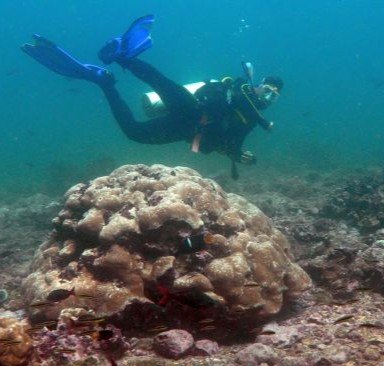
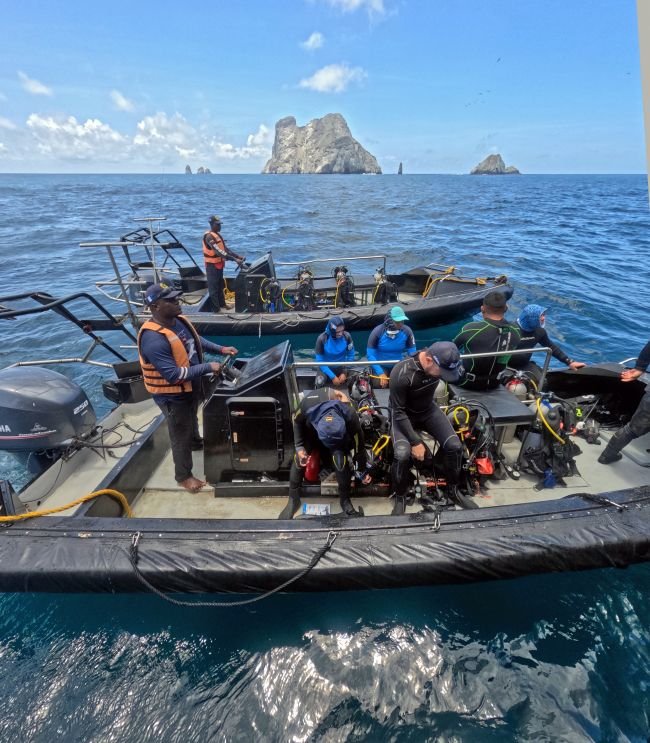
Those of us here know that diving in this area requires physical strength, a special certificaction, and a great deal of experience. Yet, the twelve of us who will be descending share the same enthusiasm: we are in one of the best places on the planet for this activity.
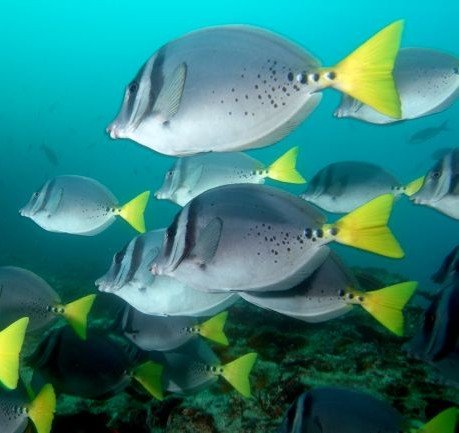
After two acclimatization dives at 30 meters (100 feet), battling powerful currents, we set out in search of the large schools of pelagic fish that migrate through this marine corridor. As we descend, an astonishing underwater world unfolds before us, bursting with life. Malpelo’s legendary currents require careful group descents, and the greenish, nutrient-rich waters remind us why the strict diving regulations here exist.
La Nevera: a face-to-face encounter with sharks
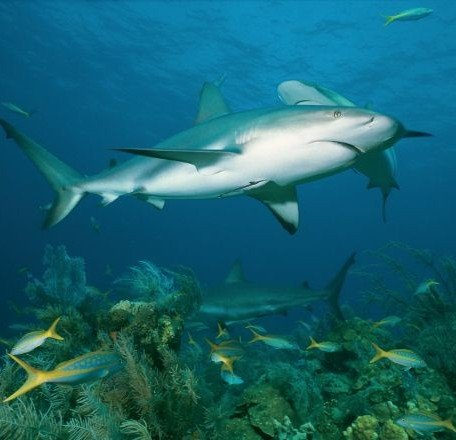
Dawn breaks over the island, whose sheer cliffs plunge hundreds of meters beneath the sea. Today marks our third dive. Visibility remains limited, but we can make out large schools of groupers and moray eels crowding the rocky reefs. Nearby, an immense aggregation of fish shelters among fan corals in an area known as La Nevera, while the silhouettes of sharks patrol the surroundings—ever-present, yet never displaying aggression.
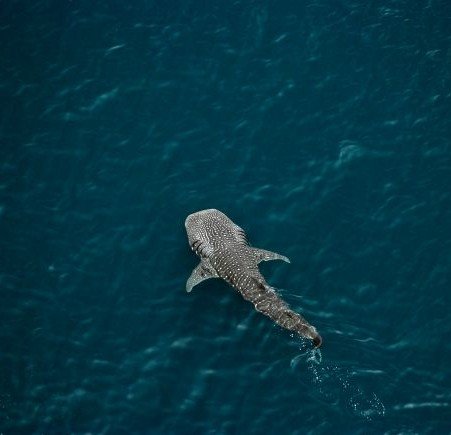
Three Galápagos sharks, followed by a dozen scalloped hammerheads and silky sharks, gather around us.
We remain perfectly still, suspended in neutral buoyancy like astronauts drifting through space, quietly witnessing one of nature’s greatest spectacles.
Our dive instructor keeps a close watch to ensure no one drifts away from the group. In Malpelo, the currents behave like underwater rivers and can be dangerously unpredictable. As a safety measure, every diver carries a satellite locator beacon. These murky green waters also feature a pronounced thermocline, the transition layer separating the warm surface waters from the cold depths below.
On our fourth day of diving, we descend into a site known as El Fantasma. At 20 meters (65 feet), after we cross the icy thermocline, a surreal seascape emerges. Coral gardens teem with endemic, migratory, and invasive species, including the Crown-of-Thorns starfish, which has spread across the reef feeding on living coral polyps.
Five days have now passed aboard our floating home. Rugged and deeply seaworthy, the Silky appears tiny against the massive rock formation that shelters the world’s largest nesting colony of Nazca boobies.
Silky: the permanent guardian of the Malpelo sanctuary
Each day, park rangers depart from and return to the Silky aboard inflatable Zodiac boats as they patrol the waters surrounding the island. The vessel serves as the sanctuary’s guardian, protecting threatened marine life from illegal fishing and combating shark poaching. Equipped with a radar capable of detecting unauthorized vessels within a 48-nautical-mile radius, it is a crucial tool in safeguarding this remote protected area.
On board, we are welcomed by Erika López, co-founder of Biodiversity Conservation Colombia (BCC), an organization dedicated to protecting marine ecosystems and endangered sharks in the Colombian Pacific. A renowned dive guide and conservationist, Erika spends much of the year living aboard the Silky.
Our return to the mainland unfolds across calm seas. In the distance, the lights of Buenaventura gradually fade as dawn breaks. Costa Rican marine biologist and park ranger Ana María Monge, from the Cocos Marine Conservation Area, perfectly captures what we all feel:
—We are part of a planet that we have a responsibility to protect. We must learn to coexist with the other species that share this blue world with us. When we dive, we have the privilege of entering a realm that is not our own, and we should do so with the deepest respect, as though entering a sacred sanctuary.
I could not agree more. Without a doubt, Malpelo is a true temple of nature.
Only two operators are officially authorized to conduct liveaboard diving expeditions in Malpelo, and only one vessel is permitted at the island at any given time.
- Colombia Dive Adventures, operator of the MV Ferox and MV Vivax, offers private cabins and small groups, with a maximum of six divers per guide.
- Cruceros Pacífico/Operadores Aliados, operator of the MV Sea Wolf, accommodates groups of up to 21 divers in double, triple, or quadruple cabins.
Before planning your trip, be sure to review the strict safety regulations for diving in Malpelo.
Leave a Reply