A trip to Las Perlas during whale season
- October 1, 2025
Staying in Panama for a few days thanks to the Stopover program? Don’t miss the opportunity to take a tour to the Pearl Islands archipelago and, from a comfortable catamaran, observe the giants of the sea that are visiting at this time of year.
By Julia Henríquez
Photos: Demian Colman and Luis Zamora
It was 5:30 in the morning when the alarm clock rang, but immediately, as the engines of my head finished starting up, my conscience said: “Today it is worth getting up early.”
At 7:30 we were to board the ferry to Bolaños Island, one of the nearly forty islands in the Pearl Islands archipelago in Panama Bay. Right on time, we arrived at the Flamenco Island marina: expectant, excited, and with our cameras ready. We weren’t just excited to visit a paradise island; the real reason for the trip and the thrill was the prospect of seeing the humpback whales.
As soon as it was time to board, a dark cloud began to threaten our path. We set sail into the storm, but remained sheltered inside the ferry. Along the way, Javier, our guide from Sea Las Perlas, told us about the humpback whales migrating through Panama.
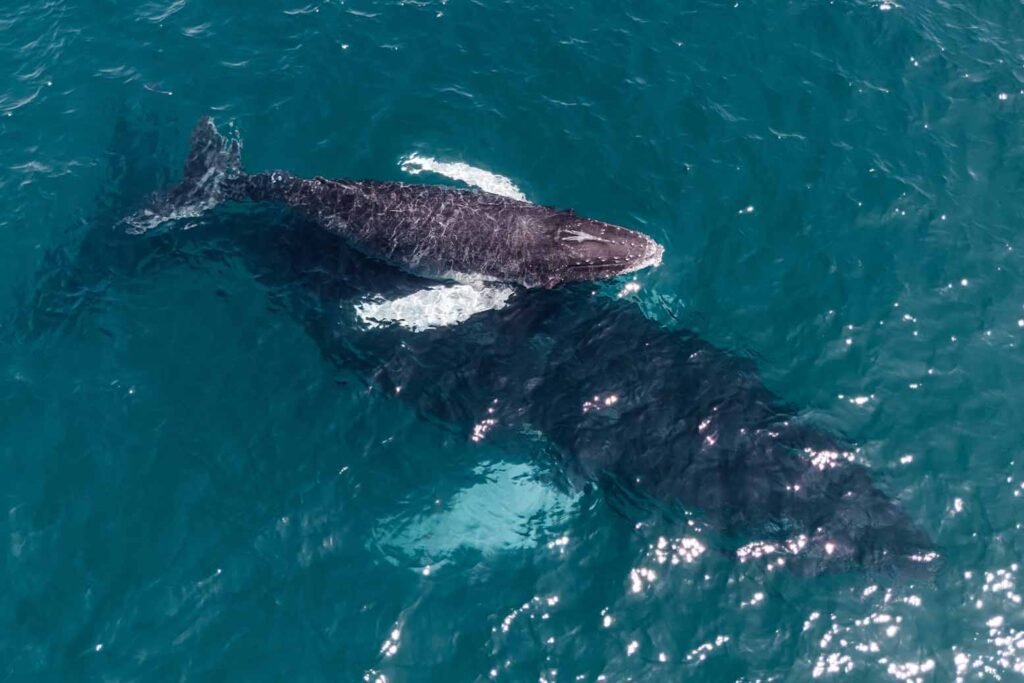
Panama is one of the few places in the world where whales from the north and south arrive in search of warm waters to mate, give birth and care for their young.
As the rain lashed down, Javier told us that nearly two thousand whales from the southern part of the continent visit us every year between July and October, with August being the month with the most sightings. Javier also explained that Panama has something very special: it is one of the few places in the world where whales from both the north and south arrive in search of warm waters to mate, give birth, and care for their calves until they are ready to begin their return journey. Those from the north arrive from January to March and are few in number. Those from the south, on the other hand, arrive in large groups and remain in the area for several months. Those that became pregnant last season come to give birth and care for their newborns in our warm, calm waters. Here they will nurse their calves and teach them their first flipper movements. Those that don’t arrive pregnant come in search of a mate. It is here, in these tropical waters, where courtship dances take place, seasonal songs are dedicated, and they finally cross paths in a jumble of waters and fins to depart after a long honeymoon back south, their feeding ground, where they will begin the next year with a new cycle.
Javier also tells us about the weather in Panama. It’s the rainy season, something easily confirmed by the downpour that batters the boat while we take shelter in the cabin.. In Panama, raini s present for most of the year, and although it may sometimes seem discouragin, g, itis during this time that the forests and their wildlife are more alive than ever. Furthermore,, the old Panamanian saying couldn’t be more true: it doesn’t rain every day or all day long. From May to Decemberthe showers are heavy , but most of the time they are short.
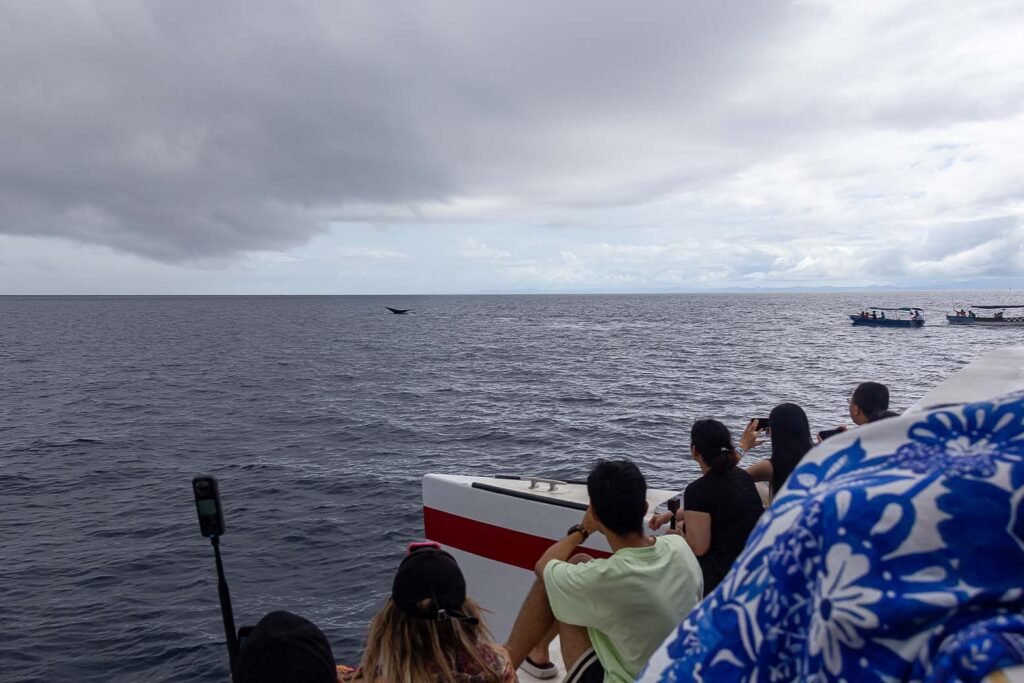
As the waves battered the ferry mercilessly, inside we kept our eyes wide open, fixed on the horizon, not wanting to miss a single moment in case the whales appeared. Suddenly, the captain sounded the alarm, and the brave souls traveling in the rain shouted, “Whales at 12!”
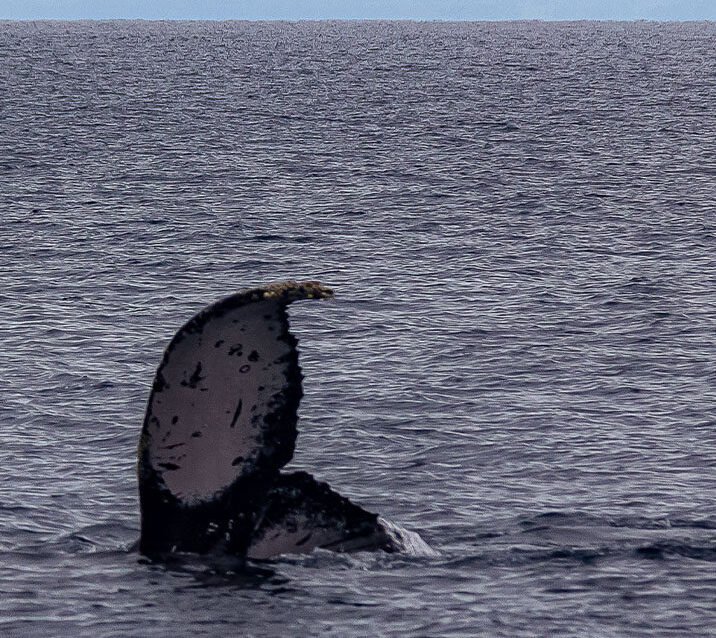
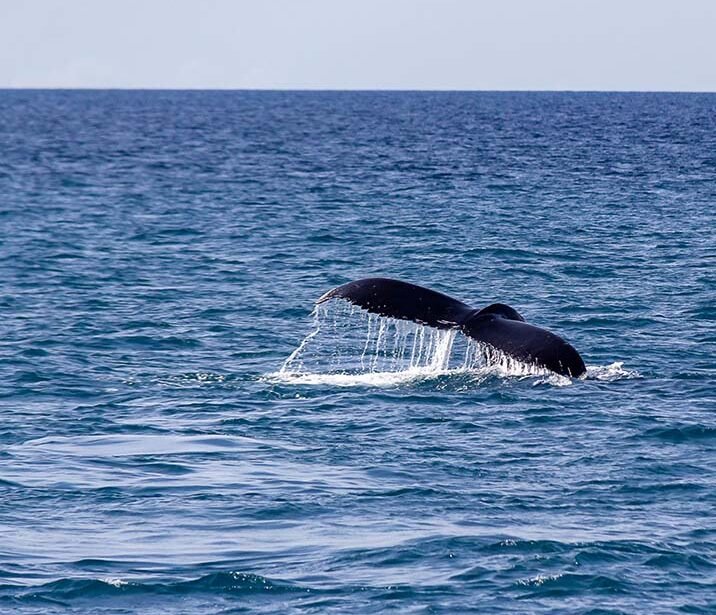
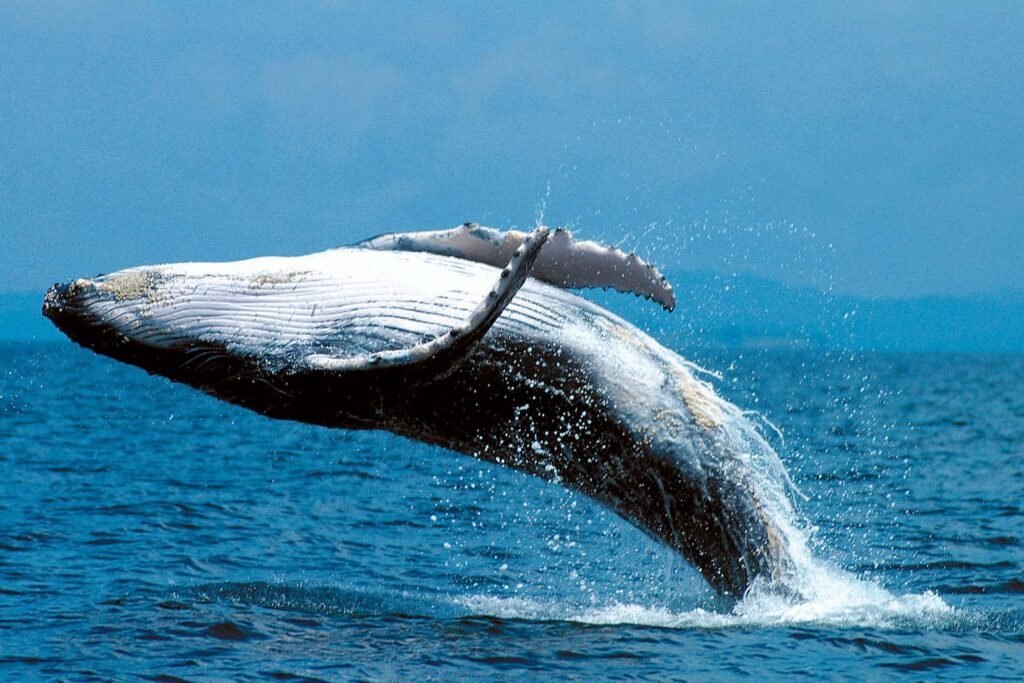
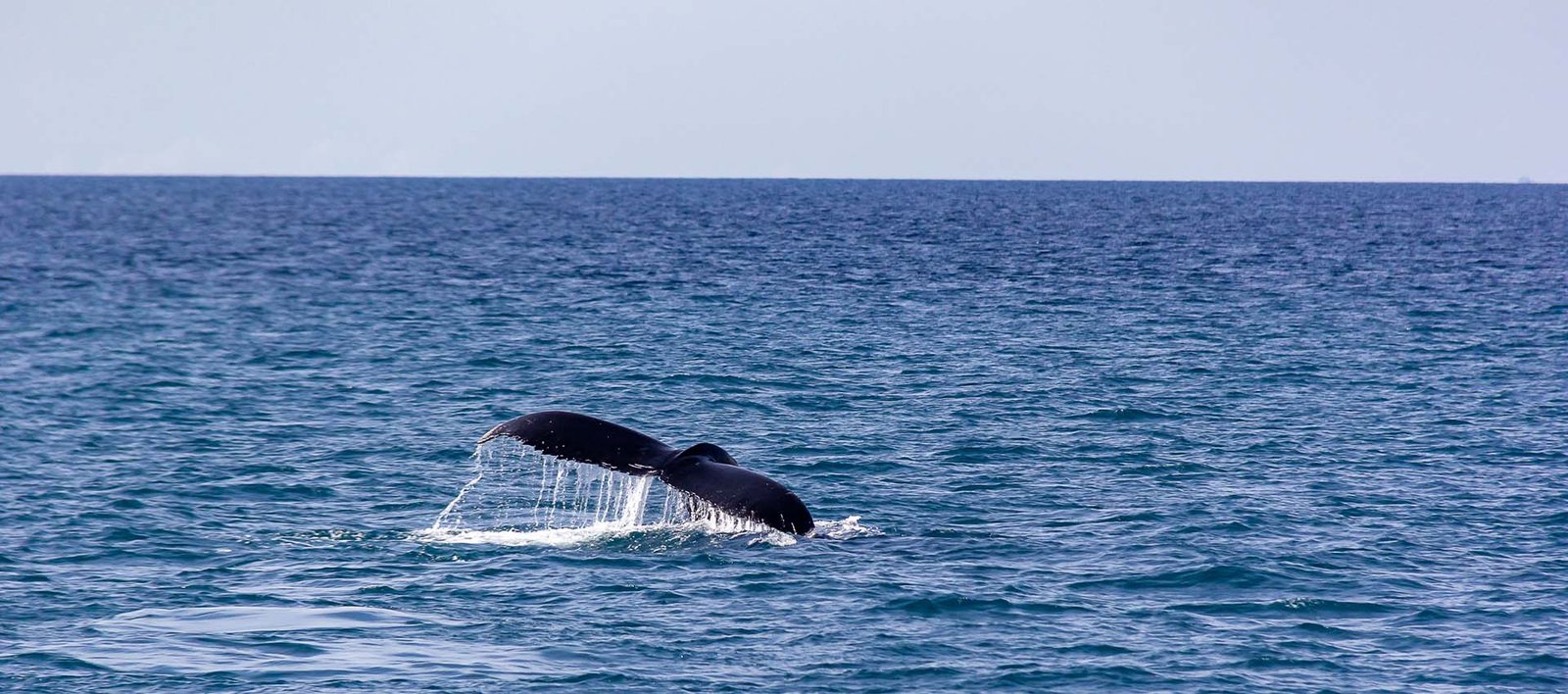
There’s no way to describe the emotion: pure magic, concentrated energy and shared happiness. In that instant, the rain ceased to matter. We ran to the bow, everything went silent, and suddenly : boom! A huge fin emerged from the depths and struck the water with force. After the crash, only expressions of astonishment and admiration could be heard. One, two, three whales: all beating their fins without stopping.
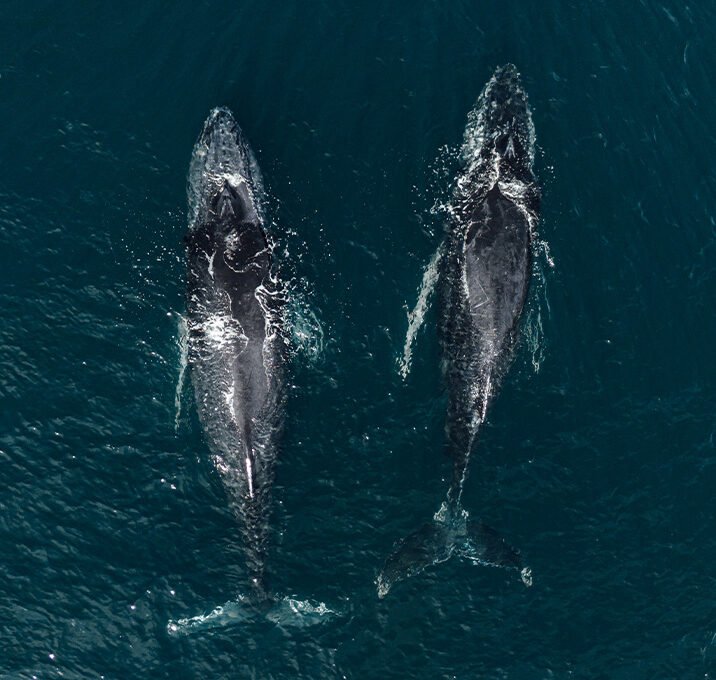
Our guide explained that they were females traveling together to protect their mother and calf. The males, meanwhile, had already left in search of other adventures. We stayed for fifteen minutes, as conservation rules stipulate that this is the maximum time we can remain with whales if they are with their calves.
To ensure their well-being, Panama has created laws and protocols that protect humpback whales and more than twenty species of cetaceans that migrate along our coasts.
In Panama, humpback whales are in their natural habitat. They visit us because they know they will find a safe haven here: no threats from fishing, tanks, or forced entertainment. Everything is as simple and complex as nature itself. You never know if you’ll see whales or dolphins, or how many there will be, because nature decides. What is certain, however, is that the encounter will be unforgettable.
To ensure their well-being, Panama has created laws and protocols that protect humpback whales and more than twenty other cetacean species that migrate along its coasts. These regulations govern the length of stay, the number of boats allowed, the maximum speed in transit zones, and the distance from which they can be observed.
The time had come to leave the group. No one wanted to go, but we knew they needed peace and privacy during this crucial period in their lives. As we sailed away, they seemed to wave goodbye with their fins. No one in the boat moved: it was as if time had stood still, and we didn’t want it to end.
But the melancholy of leaving such a long-awaited encounter didn’t even have time to surface, as another group was already in front of us. The rain let up, asas if granting us permission to savor the moment. Javier took the opportunity to tell us that whale calves learn to swim in these waters and that their “final exam” consists of being able to jump on their own. That’s why you see mother and calf flapping their tails tirelessly: when the little one manages to propel itself and jump powerfully, it will be ready to begin its great journey.
The trip to Isla Bolaños takes two hours, but it took us a little over three with the stops to see the whales. We found five groups: we saw them breathing, flapping their fins, waving their tails, and performing spectacular leaps. It was an unforgettable trip.
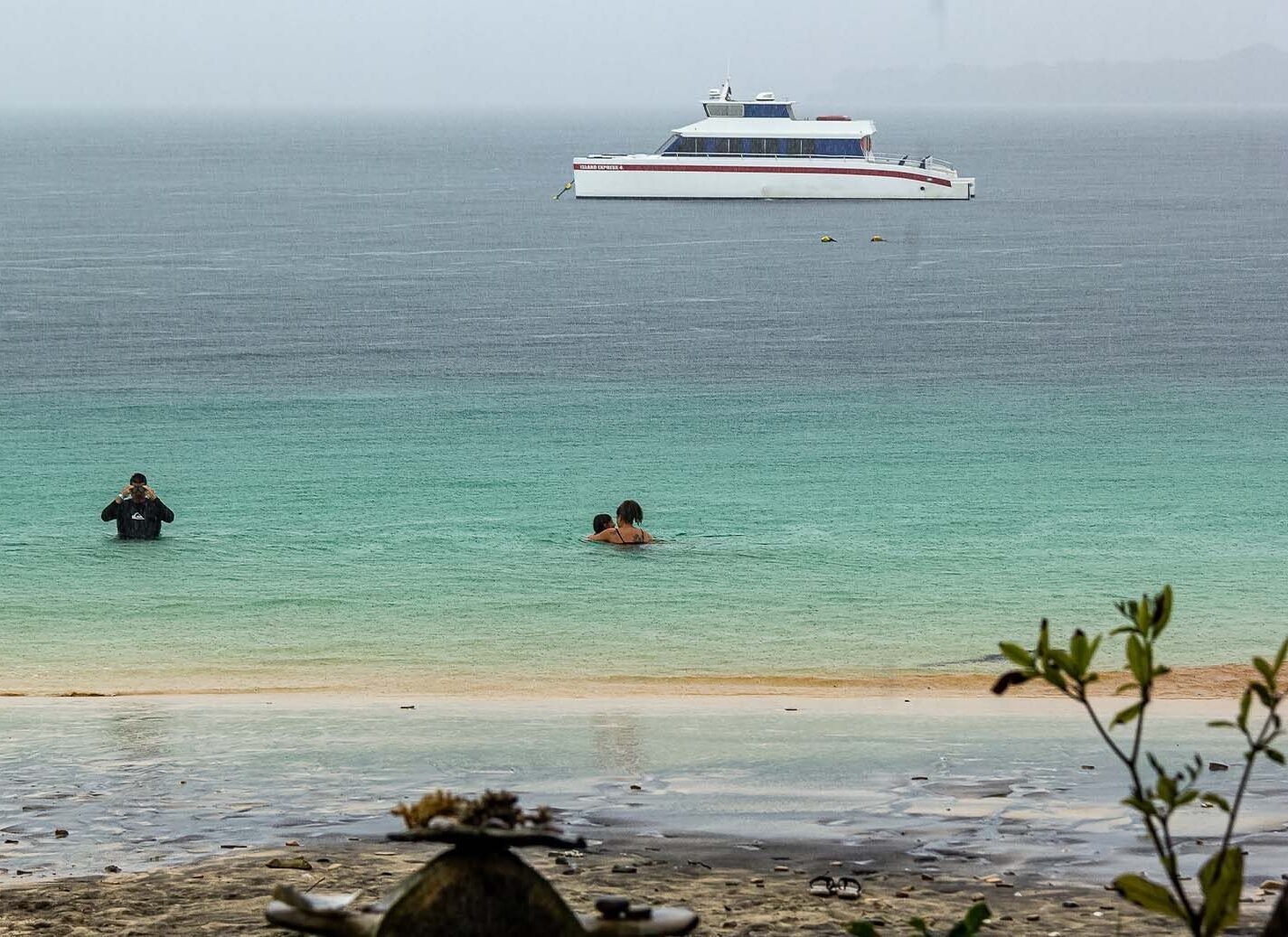
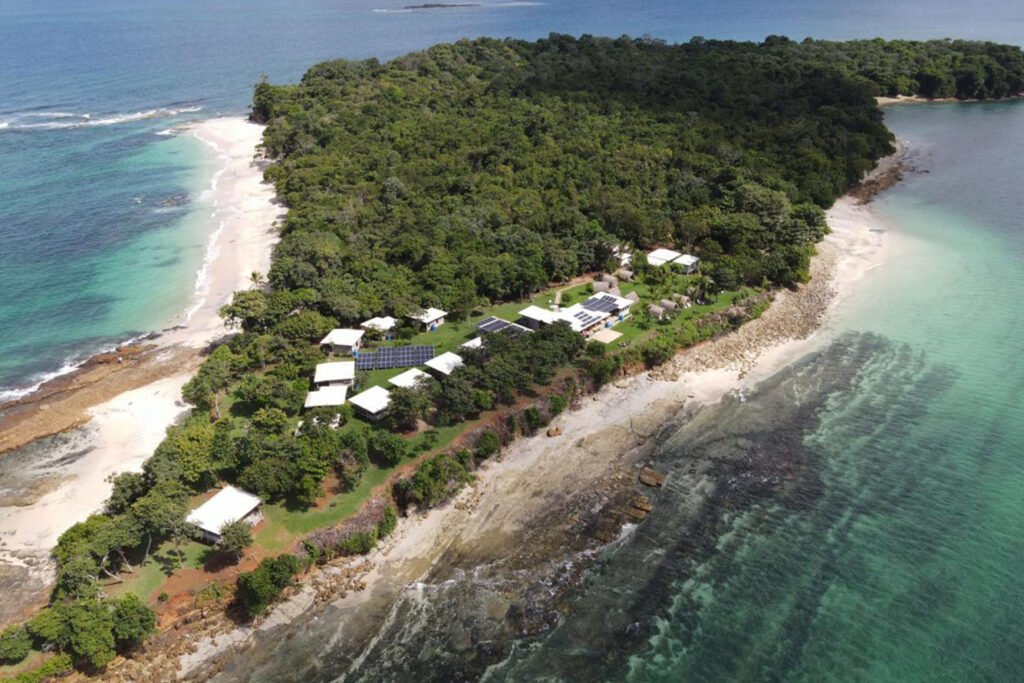
On the island, we were welcomed by our hosts at the Eco Resort Sonny Island, which, in addition to cabins for overnight stays, offers comfortable kiosks for day trips, where they serve a delicious traditional lunch. The rain started again, but the coconut rice, chicken curry, and fried fish were so tasty that we passed the time laughing and chatting with our fellow travelers, who had become our adventure buddies.
The water in front of the island was crystal clear, and although the storm was still raging, the turquoise landscape reflected the sun’s rays that managed to filter through. As if to bid us farewell—or perhaps invite us for a swim—a huge stingray leaped acrobatically close to the shore. After this surprise, it was time to return to the ferry. We left Sonny Island with the promise to come back to explore its two beaches and enjoy the crystalline water on a sunny day.
On the return trip, no one let their guard down. Now, the most coveted seats were the outside ones, from where we all looked for new humps to wave to. And they didn’t disappoint: two more groups accompanied us back. Their white tails gave us one last farewell, and before we knew it, we were back on the Amador Causeway, full of memories, photos, videos, and, above all, a wonderful story to tell.
Whale watching in Panama
Remember:
- To fully enjoy this experience, always respect conservation regulations. Ensure your vessel remains at least 250 meters away from the whales.
- If possible, use sunscreen and biodegradable insect repellent.
- We were able to take this excursion thanks to the support of Sea Las Perlas and Gotuuri.com
To experience this for yourself, book your tour at goturi.com
Leave a Reply