Voices of a land

Voices of a land

By Margarita de los Ríos
Photos: Javier A. Pinzón

Wrapped in mist and framed by mountains rich with stories, Chiguirí Arriba reveals a mosaic of people who have turned nature into opportunity. Sustainable tourism, conservation, and tradition intertwine in this corner of Coclé, where every trail leads to a story of resilience and hope.

Cerro la Vieja

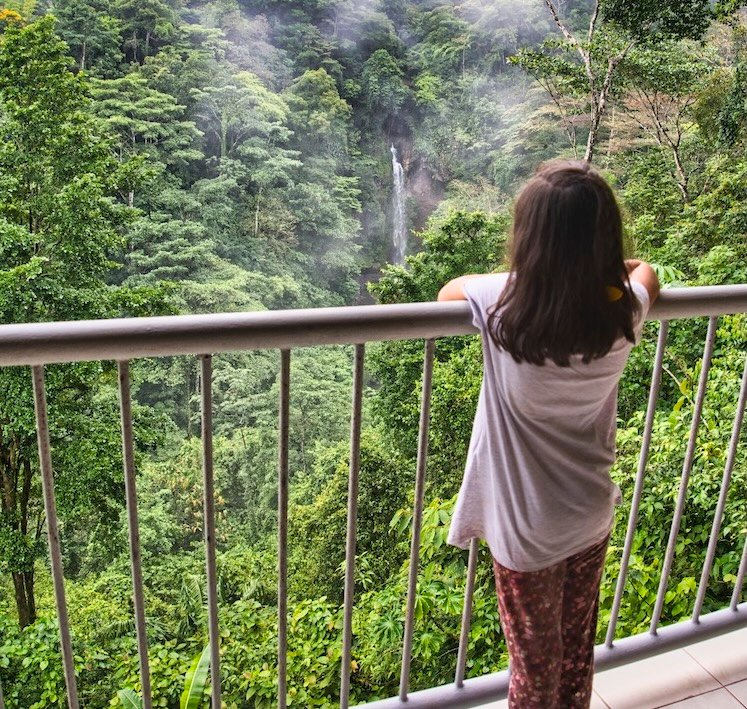
As I rest in the hammock on the balcony of my room at Villa Tavidá, I watch the mist play at painting the landscape. At certain times the mist disappears completely, offering a clear view of the waterfall; at other times, it capriciously sweeps white brushstrokes across the deep green of the forest. At any time, the artist may decide the show is over and lower the curtain, covering everything in a thick white veil.

Yet the mist cannot conceal the sound of water plunging in free fall. I close my eyes and, guided by that constant roar, imagine the cascade emerging from the mountain and rushing through the forest.

The scene repeats itself again and again in Chiguirí Arriba, a place so close to Panama City—just 143 kilometers away—and yet so distant in rhythm, spirit, and meaning that it feels like another universe altogether. We came here searching for legendary characters who appear repeatedly in stories collected across the country. We found them all gathered around the same hearth, just a few kilometers from one another. Before long, we were hiking through mountains steeped in legend and swimming in rivers that tumble down the slopes in waterfalls and giant leaps, leaving pools of brilliant blue water in their wake.

Cerro la Vieja 2

SLEEPING TO A CHORUS OF CRICKETS AND WAKING TO THE CALL OF ROOSTERS

María Romero

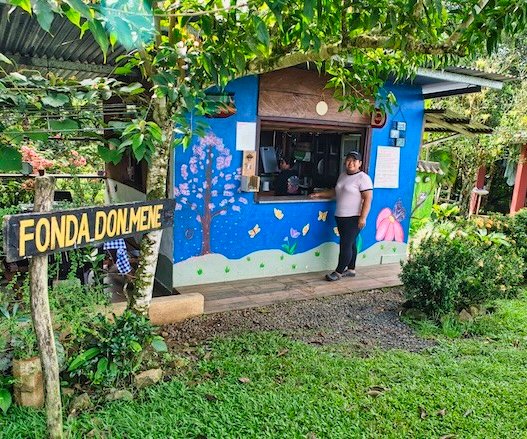
This is the story of María Romero: wife, mother, grandmother, and community leader. Her home is home to Hostal Don Neme—named after her late husband—and Fonda de Yolanys, run by her daughter-in-law. It is also the story of Annie Young, leader of the Panamanian Sustainable Tourism Foundation (APTSO), who works from the capital to promote initiatives that allow local communities to benefit from tourism.

Some people shine with a light of their own, and María is one of them. When her husband passed away, she inherited a wooden “chiva”—the traditional rural bus of the Panamanian countryside—and continued the business herself, navigating the winding mountain roads of Coclé without hesitation.

An Extraordinary Place

Over time, she purchased land, built a house, added one cabin, then another, and another. She believed the landscape was too beautiful not to share and that visitors deserved affordable lodging.

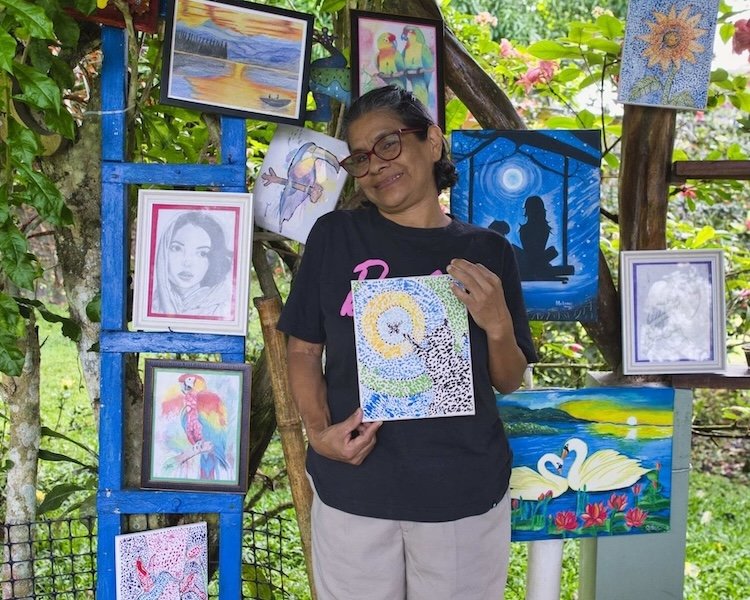
Her leadership transformed the community as well. She invited local children to read in her library and brought in an art teacher to teach them how to draw. Today, roadside stalls are decorated with colorful flowers and hummingbirds, and her home has become, in many ways, the home of the entire community.

María Romero 2

BUTTERFLIES THAT TRANSFORM LIVES AND CROPS THAT REGENERATE FORESTS

Mariposario

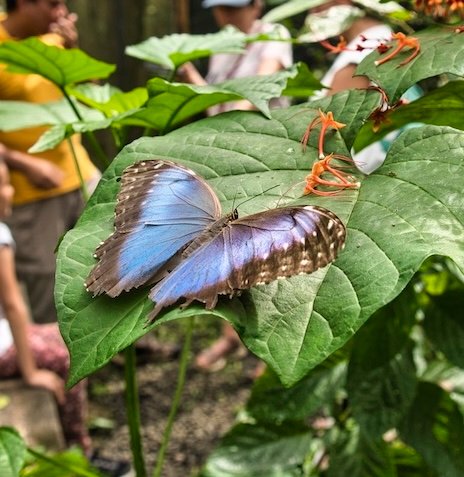
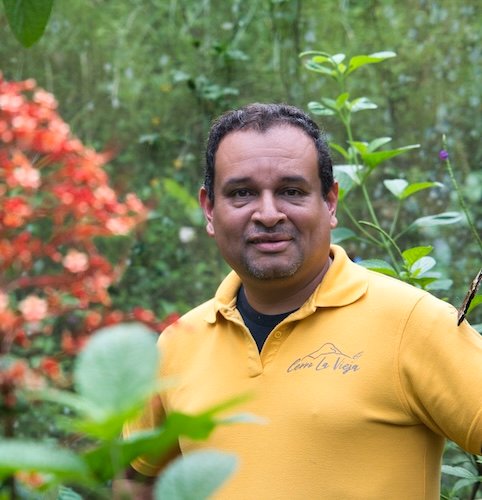
Just a short distance away stands the butterfly farm of Samuel Valdés, a biologist and entomologist from the University of Panama. Years ago, he decided to explore butterfly breeding and founded the Cerro La Vieja Butterfly Farm.

When the pandemic threatened to destroy his dream, he received an unexpected call from Turkey. Mariela Sagel, Panama’s ambassador to that country, had visited the Tropical Butterfly Garden in Konya—the largest in Europe—and was surprised not to find a single Panamanian butterfly.

Convinced that Panama should be represented in a place devoted to tropical butterflies, she searched online for someone who could help. She found Samuel, and within minutes they had agreed to send a sample.

While the ambassador handled the diplomatic arrangements in Tukey, “we had to rebuild our facilities and, above all, rebuild the social fabric,” Samuel recalls.

In December 2023, they made their first symbolic export of butterfly pupae. Today, they export an average of 20,000 pupae per month and have expanded into markets in the United States, Canada, and the Netherlands, from where they are distributed throughout Europe.

Most importantly, however, is the project’s community impact.
“We produce about 40 percent ourselves, and the rest comes from families in La Pintada, Coclesito, Olá, and Boquete. There are 45 producers in total, most of them rural women who raise butterflies in their backyards,” Valdés explains.

Mariposario 2
The Smithsonian institution has only certified four farms in the worlds a Bird Friendly, and Las hagas is one the four.

Cacao Bird Friendly

The global demand for chocolate has fueled the industrial cultivation of cacao, leading to the clearing of vast tracts of forest. To counter this trend, an initiative led primarily by Cornell University emerged 25 years ago to promote agroforestry farms—places where cacao is grown under forest canopies and alongside conserved woodlands.

At the same time, the Smithsonian Institution created the Bird Friendly certification to ensure that migratory birds traveling south for the winter can find suitable places to rest and feed along their journey to the tropics.

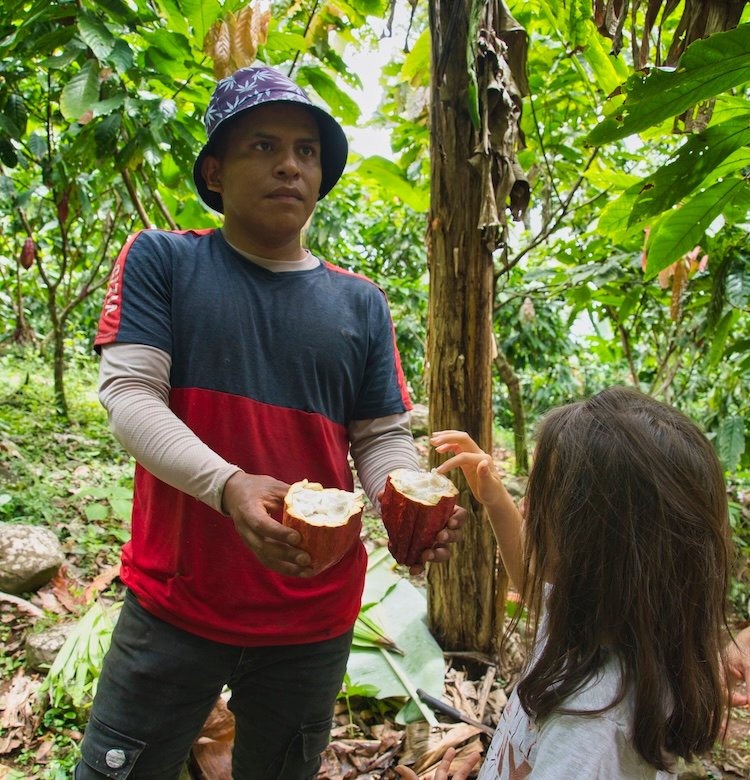
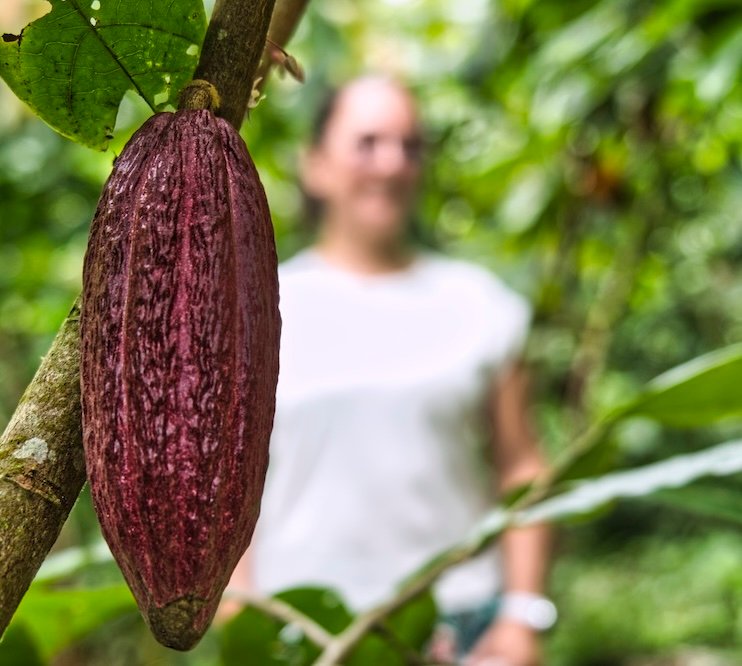
Samuel Valdés—the same man behind the butterfly project—embraced both initiatives. Today, his farm, Las Hadas, holds agroforestry certifications recognized in the United States and the European Union. It is among the few farms in the world to earn the Bird Friendly seal.

The flavor of cacao

To achieve this distinction, he had to “do things the right way”: preserve existing forest, allow degraded areas to regenerate naturally, maintain at least 60 percent native tree cover with more than ten different species per hectare, limit cacao cultivation to less than 30 percent of the total area, and control pests without pesticides or agrochemicals.

The results speak for themselves. The farm produces approximately 1,200 kilograms of cacao annually, while the average yield in other parts of Panama is closer to 200 kilograms. The beans are transformed locally into Cerro La Vieja chocolate, which is purchased by the Smithsonian Institution and sold at the Metropolitan Natural Park store in Panama City.

The farm is also a haven for wildlife, with more than 150 bird species and 20 mammal species recorded on the property.

The cocoa produced at Las Hadas is processed entirely in Panama. The final product, Chocolate Cerro La Vieja, is available at the metropolitan park gift shop in Panama City.

Hotel Alto Monte

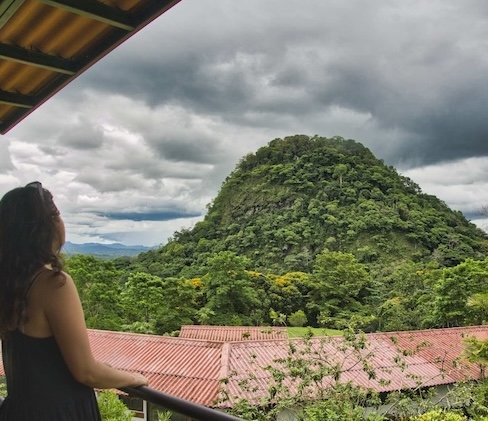
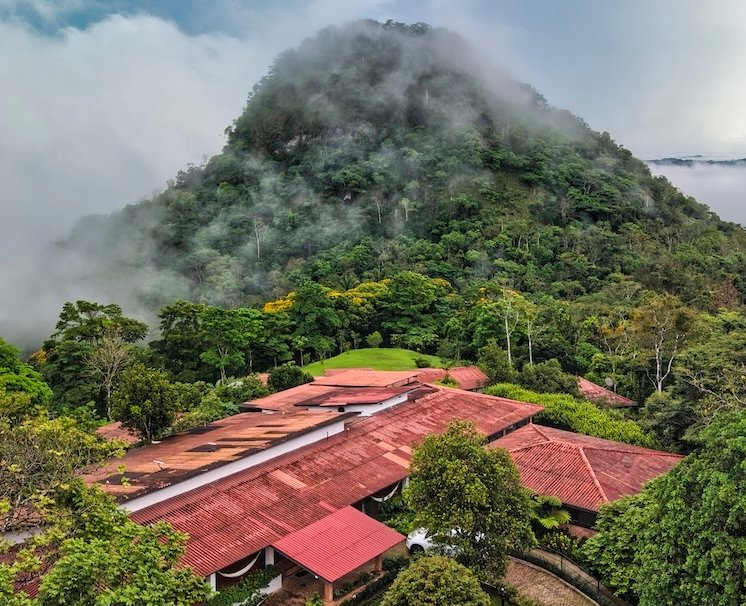
Hotel Alto Monte was built around Cerro La Vieja and seems to gaze upon the mountain in tribute. Here, the “Queens of the Night” release their fragrance at dusk, while the “Good Morning” flower opens with the sunrise and remains in bloom until midday. Everything has been designed to awaken the senses.

Owner Ameli Ventura explains that the experience begins with introspection: seeing, feeling, smelling, and absorbing what the land has to offer. Then come the external therapies—mud baths, energy-cleansing rituals, and detox programs. Later, group activities and evening bonfires complete the experience.

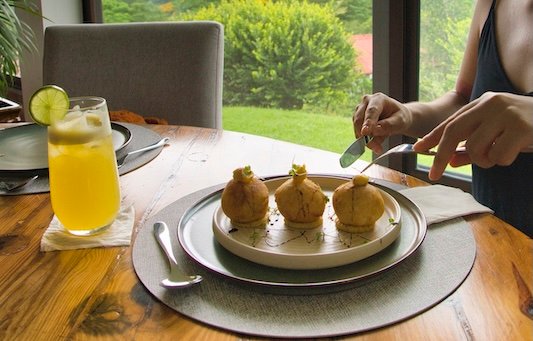
The restaurant also plays a leading role. Chef Jaime Jipsion elevates traditional Panamanian cuisine with creations such as yuca croquettes, a gourmet interpretation of the beloved carimañola.

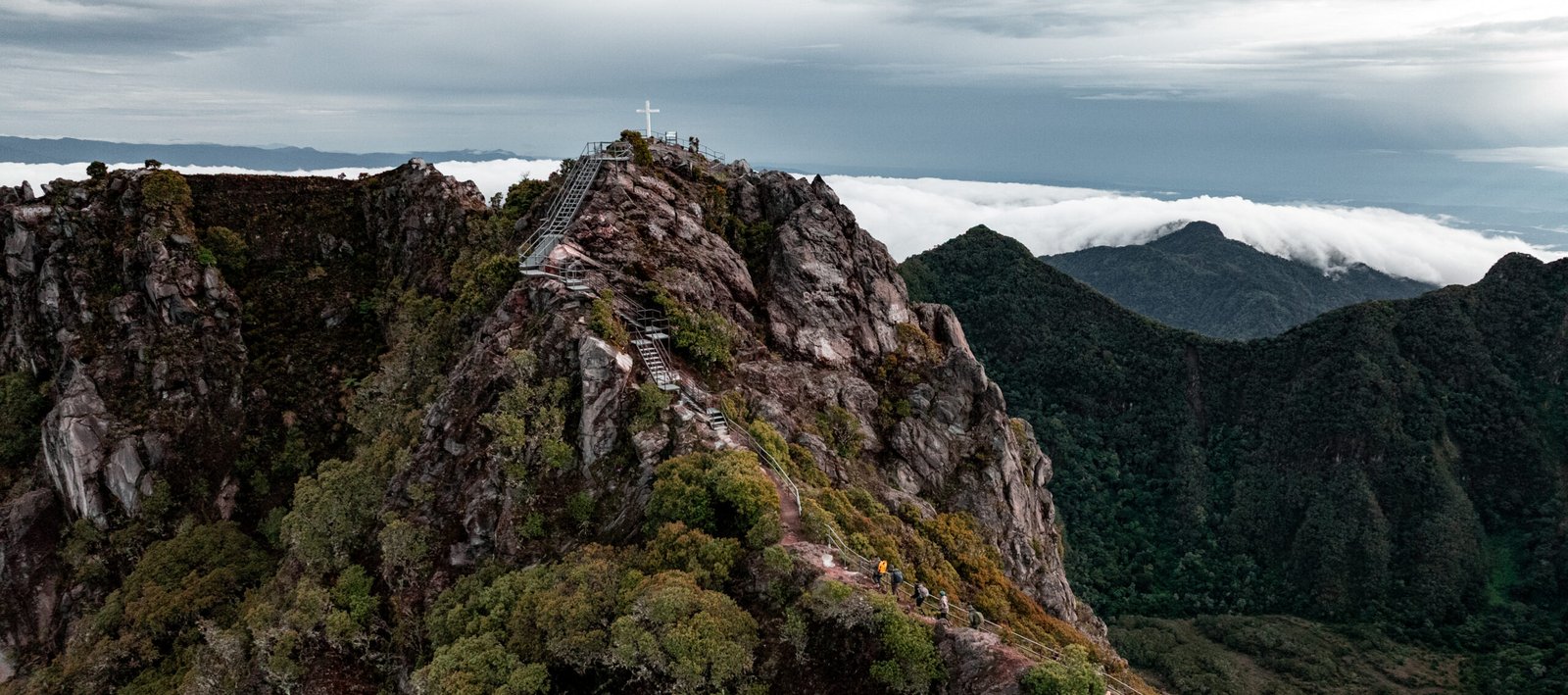
Recently reopened, the 18-room hotel is surrounded by fragrant gardens and forest trails. With the guidance of local experts, visitors can hike to the summit of the legendary Cerro La Vieja.

A Lifetime Of Service. Alfonso Jaén.

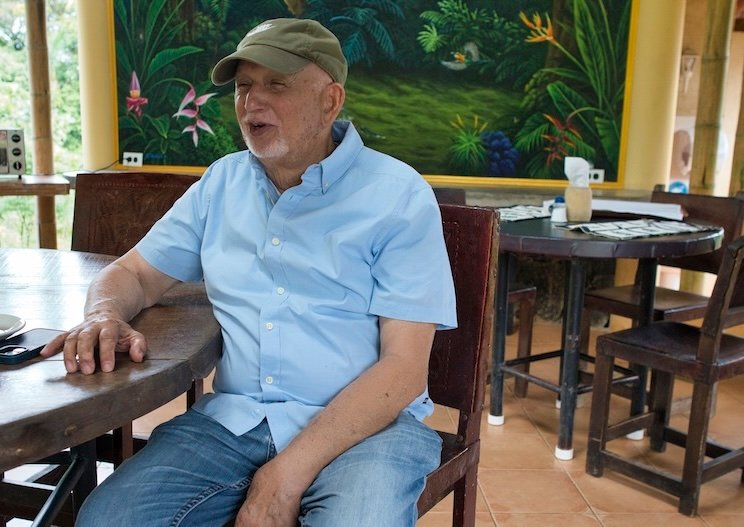
At 82 years old, Alfonso Jaén has recently retired and moved even higher into the mountains where he has spent decades planting seeds—both literal and metaphorical. Today, he lives beside a monument to Pachamama that he built with his own hands.

Jaén was the visionary behind the first restaurant to present traditional Panamanian cuisine in an elegant setting while offering folkloric performances for visitors: the legendary Las Tinajas.

Educated by Jesuits in Brazil and influenced by liberation theology, he eventually left the priesthood, but never abandoned his commitment to social change. He has been a key figure in the development of APTSO, in María Romero’s initiative, in the growth of Samuel Valdés’s butterfly farm, in the evolution of Hotel Alto Monte—when it was still known as Cerro La Vieja, and in the creation of Villa Tavidá.

Today, he leads the Huertos de Vida (Gardens of Life) project, which encourages rural families to cultivate medicinal plants in their own backyards. It may sound simple, but the initiative is really about preserving seeds and safeguarding ancestral knowledge that might otherwise disappear with the older generations.

The legendary Cerro La Vieja, together with the mist that veils and reveals it, forms the centerpiece of the entire Chiguirí Arriba circuit.

The Journey Home

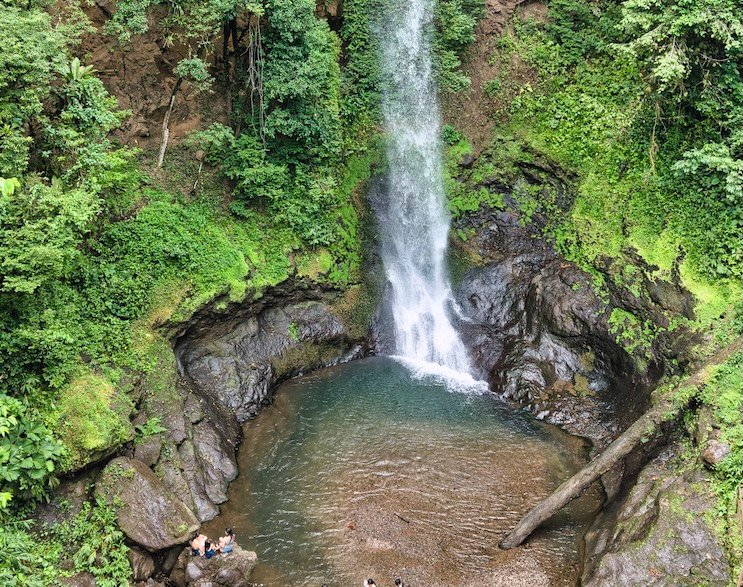
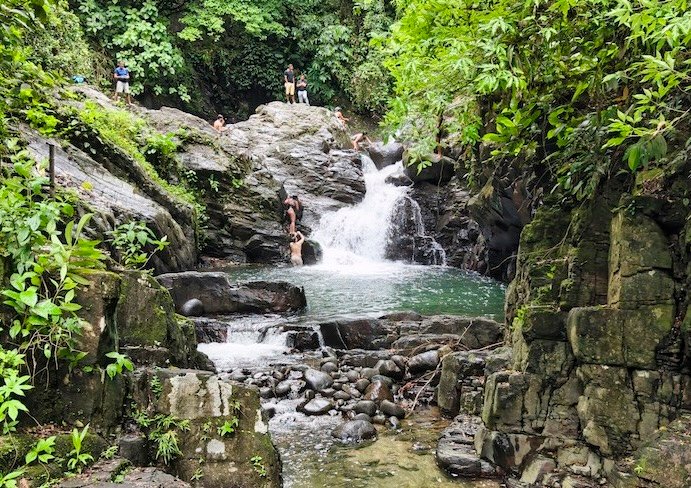
Before leaving, we stop at Las Pailas de Monte Arriba waterfall, where the water descends in a series of natural steps, forming crystal-clear blue pools along the way.

Then it is time to say goodbye. The road, winding like a serpent, drops quickly toward El Valle de Antón and from there joins the Pan-American Highway. Within just three hours we are back to our daily routines, yet the roar of the Tavidá wsdaterfall and the rolling green folds of Coclé’s mountains linger in our senses long after the journey ends.

Leave a Reply

Your email address will not be published. Required fields are marked *

aa