AdventureFour Faces of Panama
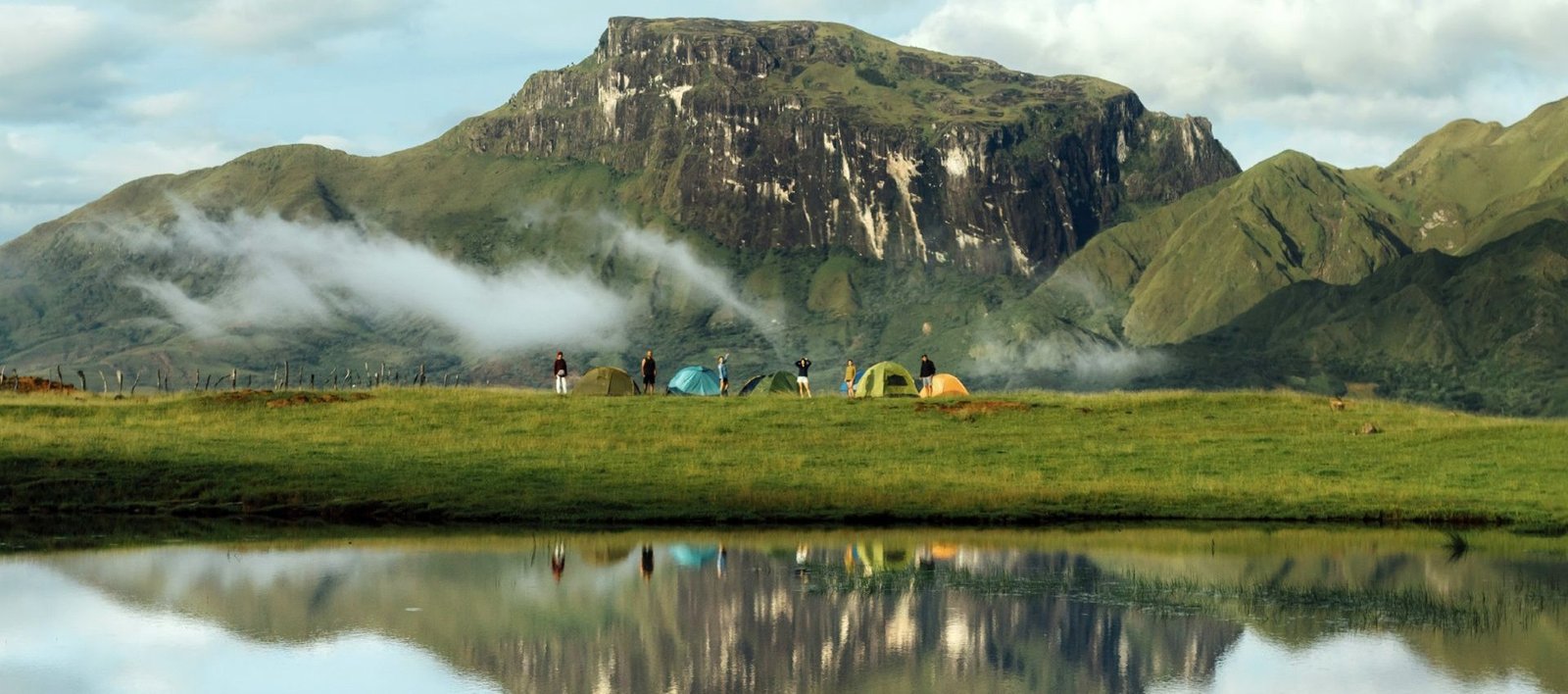
Landscape of Panama.

Four Faces of Panama
People often speak rhetorically about the contrasting landscapes that Panama offers, but this goes far beyond a cliché. All it takes is diving into the deep waters of Coiba Island or walking through the dense trails of Santa Fe National Park to discover the many faces the country reveals within just a few kilometers. Through the curious lens of Luis Zamora, we glimpse four scenes where this diversity remains in constant dialogue.

By Margarita de los Rios
Photography by Luis Zamora.

Sacred Landscapes of the Comarca

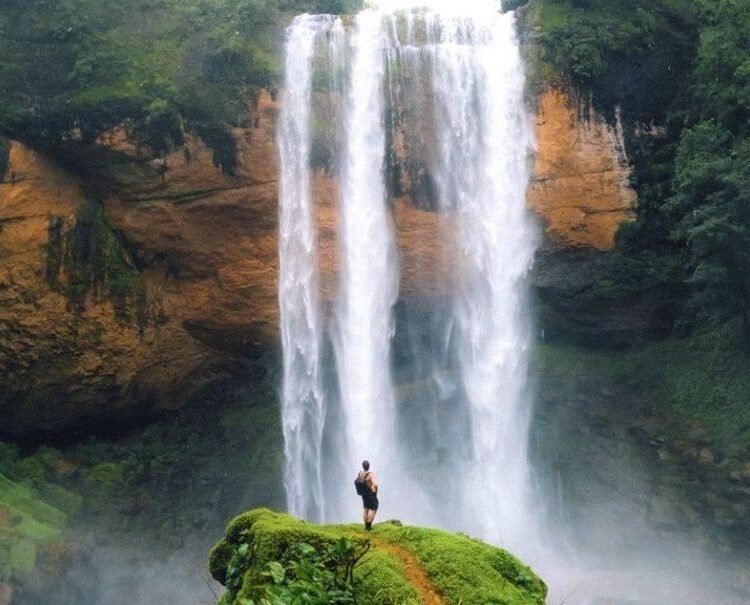
Cascada Kiki
Cascada Kiki en la Comarca Ngäbe Bugle en el Distrito de Besiko

In the mountainous heart of western Panama, where mist settles early over the hills and time moves at a slower pace, lies the Ngäbe-Buglé Comarca. More than a territory, it is a living space of memory, resistance, and a deep bond with the land. Here, the landscape is not observed from afar—it is inhabited, worked, and respected.

Within this ancestral geography stand two natural jewels that embody this spirit: Cerro Peña Blanca and Kiki Waterfall. The first rises majestically at 1,552 meters above sea level, like a silent guardian of the district of Müna. From its vegetation-covered slopes, the view opens to chains of mountains and green valleys fading into the horizon.

Climbing it is not only a physical challenge but a sensory experience: the air grows cooler, the silence fills with insects and birds, and each step reminds visitors of the intimate relationship between the Ngäbe communities and their environment.

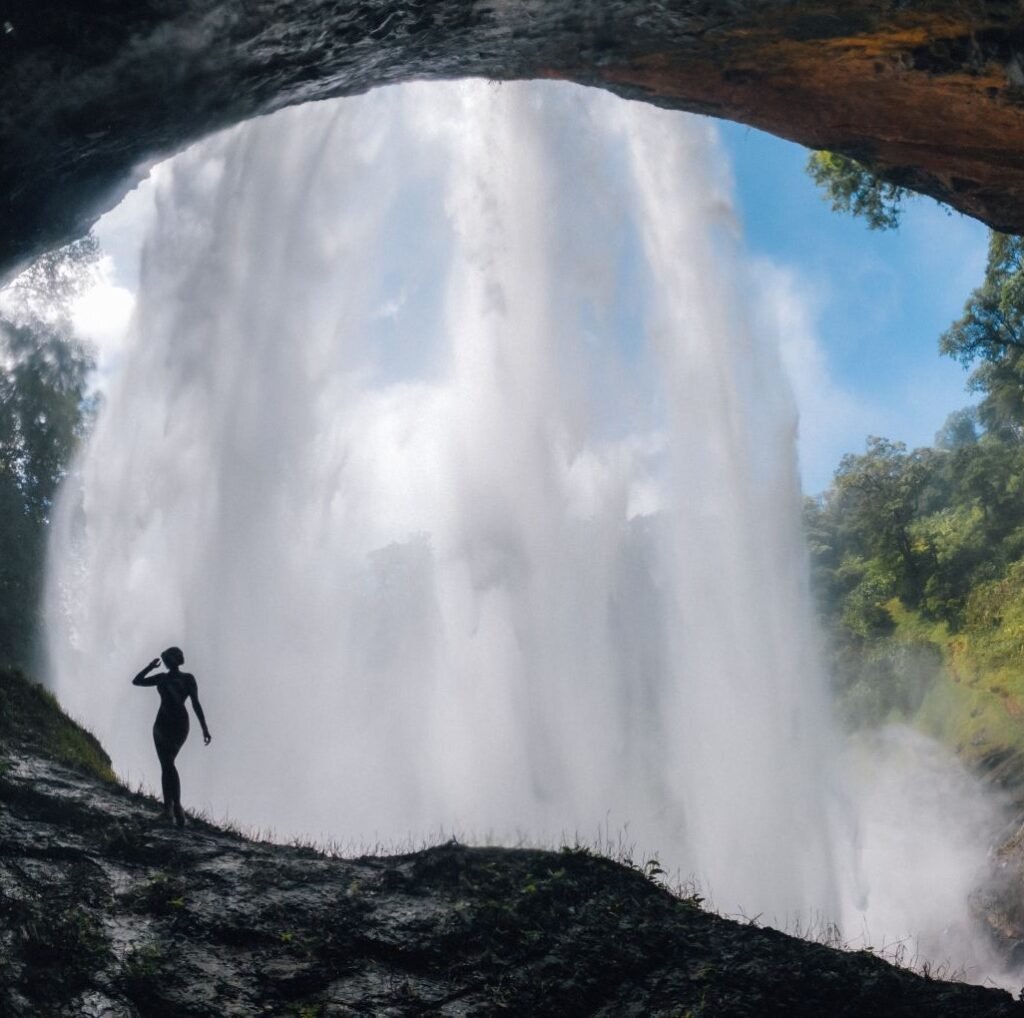
Further down, hidden within the forest, lies Kiki Waterfall. The sound of water announces its presence before it appears. Its clear, steady cascade refreshes the surroundings and offers a space for pause that feels almost ceremonial. For many visitors, reaching this place means reconnecting—with nature, with the tired body that welcomes the cold water, and with the oral histories that surround these landscapes.

Mountain and waterfall tell a single story. One invites you to look from above; the other asks you to pause and listen. Together, they embody the essence of the comarca: a territory where the landscape is not merely scenery, but the protagonist.

Cueva en Kiki

How to Get There

For Peña Blanca, access is via the Pan-American Highway through Tolé, about two hours to the town of Peña Blanca. The trail begins in front of the school, and the ascent covers about 3.6 km. The hike can take around three hours.

For Kiki Waterfall, access is via the Pan-American Highway through Boca del Monte toward Soloy. From there, a four-wheel-drive road leads to Cerro Banco, where the hike begins. The first viewpoint is about 15 minutes away.

Coiba Beneath the Surface

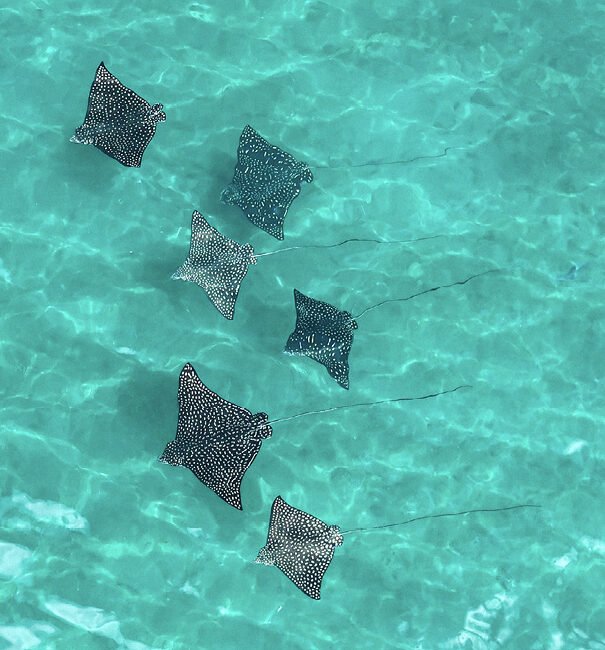
Beneath the crystal-clear waters of Coiba National Park, a fascinating world comes to life. In the shadows of coral formations, angelfish and damselfish move among anemones, while rays and schools of jacks glide through the blue with almost choreographed precision. From the deeper currents, manta rays emerge in perfect synchrony, and among the corals, sea turtles move with ancestral calm.

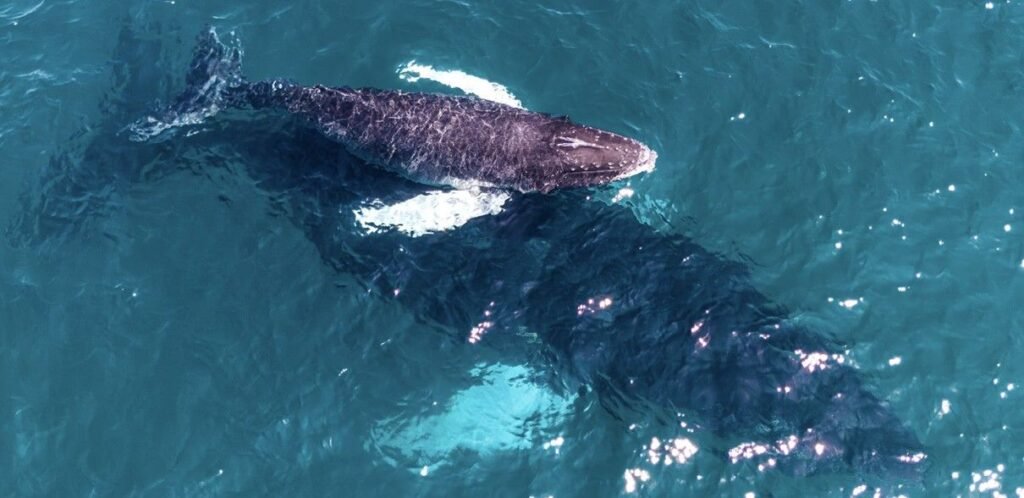
Between December and April, the waters welcome giants such as the whale shark; between August and October, humpback whales transform the marine horizon. Every dive in Coiba is an endless exploration, a reminder of the magnitude of an ecosystem that has remained almost untouched for millennia.

Turquoise waters envelop the visitor, turning them—if only for a moment—into privileged witnesses of an exceptional biodiversity where every encounter feels unique.

Ballenas

Beneath a Forest of Mushrooms

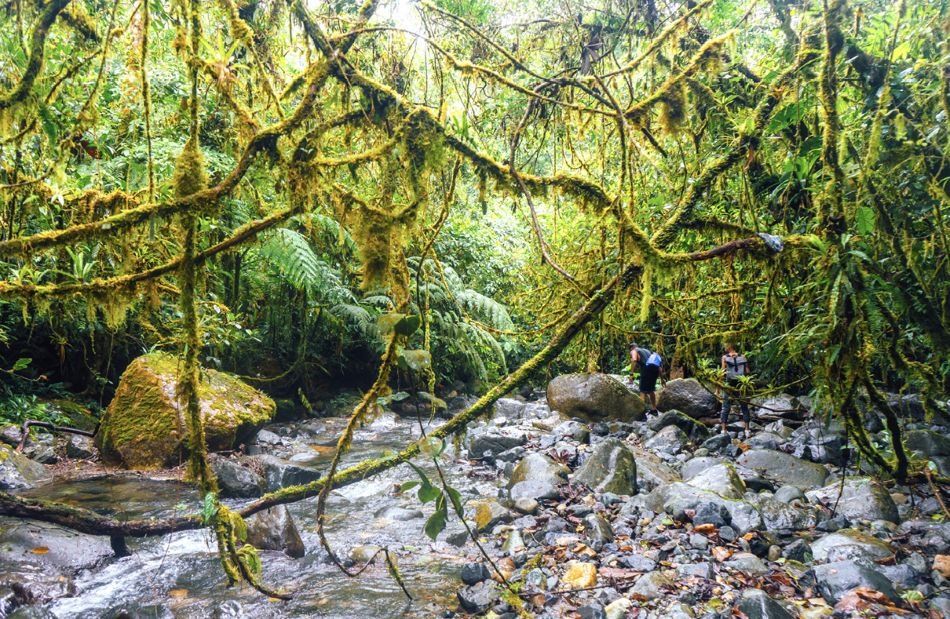
In Santa Fe National Park, humidity is not an inconvenience—it is a living presence. It is felt before it is seen, like a warm breath announcing that here everything grows, everything breathes, everything transforms. The forest is not simply crossed; one enters it by accepting its rules.

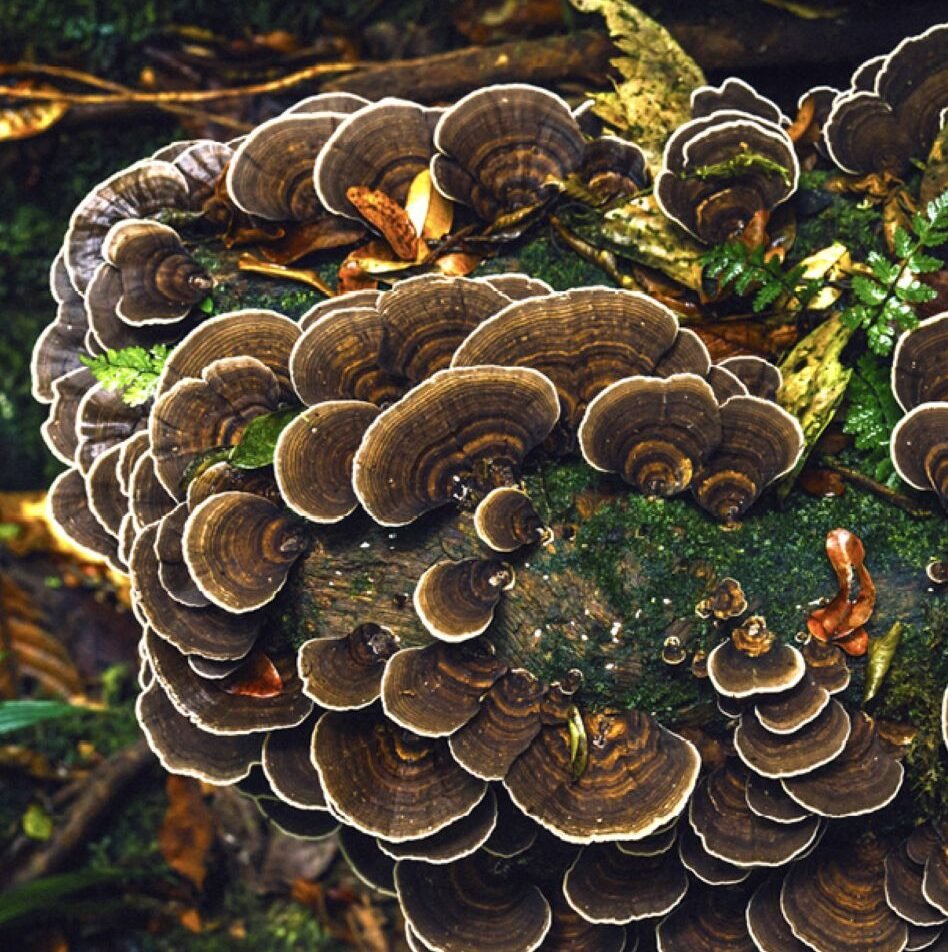
After the rains, the ground becomes a silent mosaic. Among decomposing leaves and fallen trunks, mushrooms emerge with quiet beauty. Some resemble small lamps in the dimness; others take on impossible shapes, ephemeral sculptures destined to disappear in a matter of days. They are visible proof of a perfect balance between decay and rebirth.

Walking through Santa Fe forces you to slow down. The mud measures each step, roots draw ancient maps, and mist softens the edges of the landscape. There is no grandeur here, only subtlety: the smell of wet earth, beams of green-filtered light, and the certainty that the essential happens close to the ground and in silence.

Hongos en Parque Nacional Santa Fe
Naturaleza en Parque Nacional Santa Fe
Parque Nacional Santa Fe

How to Get There

Located in Veraguas. Access from the town of Santa Fe via marked trails. Coordination with local guides is recommended, especially during the rainy season.

The Beaches of Bocas

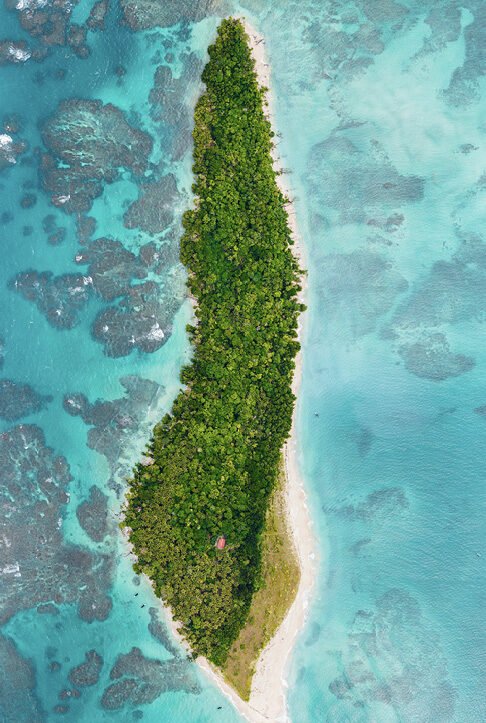
In Cayo Zapatillas, within Bastimentos Island Marine National Park, time seems to follow a different rhythm. There is no mechanical noise or urgency—only the murmur of the sea and a light that falls unobstructed upon nearly untouched beaches.
Its recent recognition in international rankings confirms what visitors quickly discover: here, nature still sets the pace.

The waters, of hypnotic clarity, blend turquoise tones with deep greens over white sand and seagrass beds. Sea turtles, starfish, and tropical fish remind visitors that this is not merely a postcard-perfect landscape but a fragile and protected ecosystem.

The beaches, wide and generally deserted, preserve a rare beauty in the Caribbean: the beauty of the untouched. There are no buildings or permanent marks. In Zapatillas, beauty is not exploited—it is cared for.

Playas de Bocas

How to Get There

Boat access from Bocas Town (45 minutes). Arrival to Bocas del Toro by air from Panama City.

Leave a Reply

Your email address will not be published. Required fields are marked *

aa