Art Deco: 100 Years in Miami Beach
- October 1, 2025
As Art Deco turns 100, Miami Beach celebrates its breezy, pastel-hued version of the style with rooftop cocktails, walking tours, and a street festival that’s more sequins than symposium.
By: Laura CS Gannon
Texts and photos by: Edgar Cadena
Center of the English-speaking Caribbean
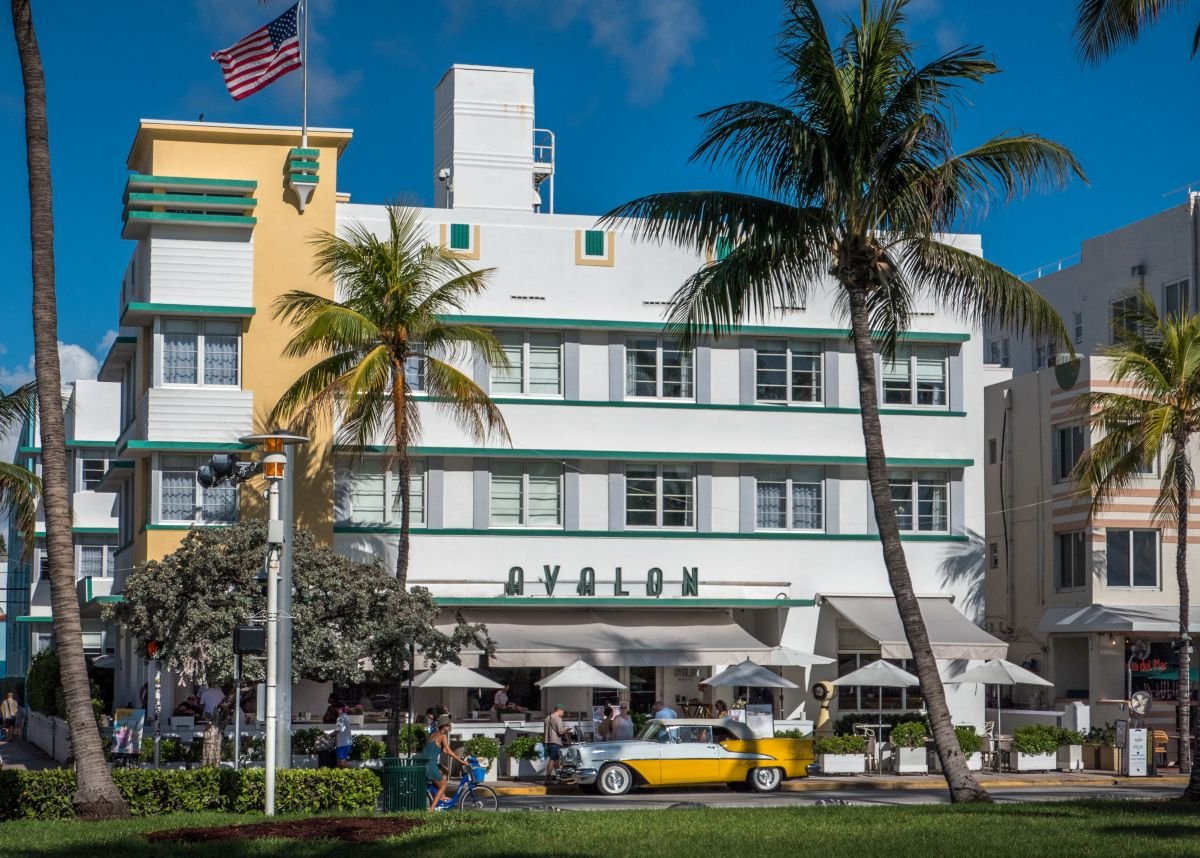
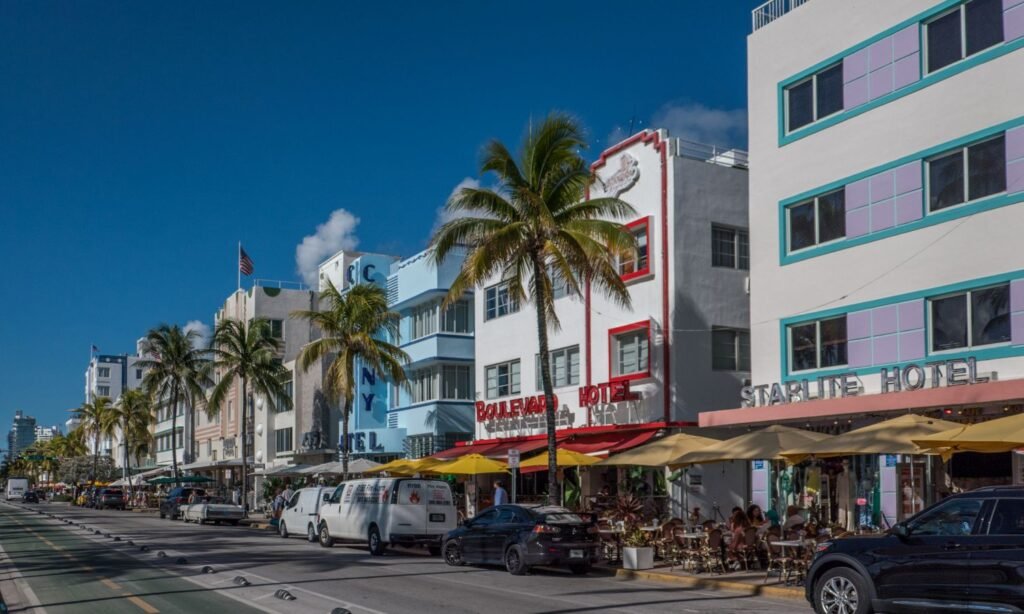
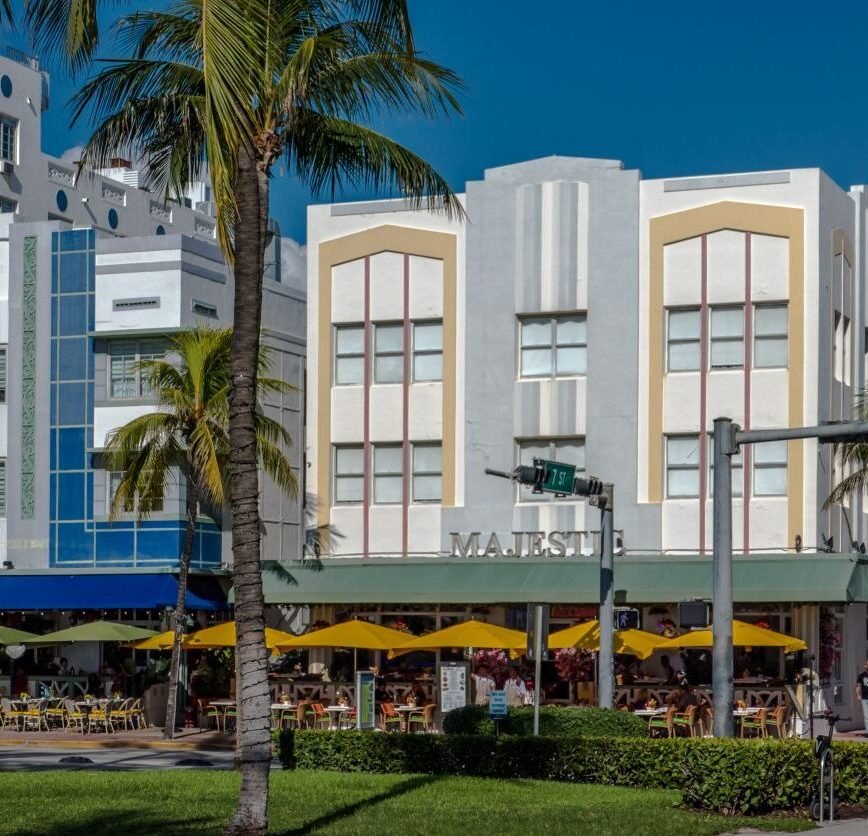
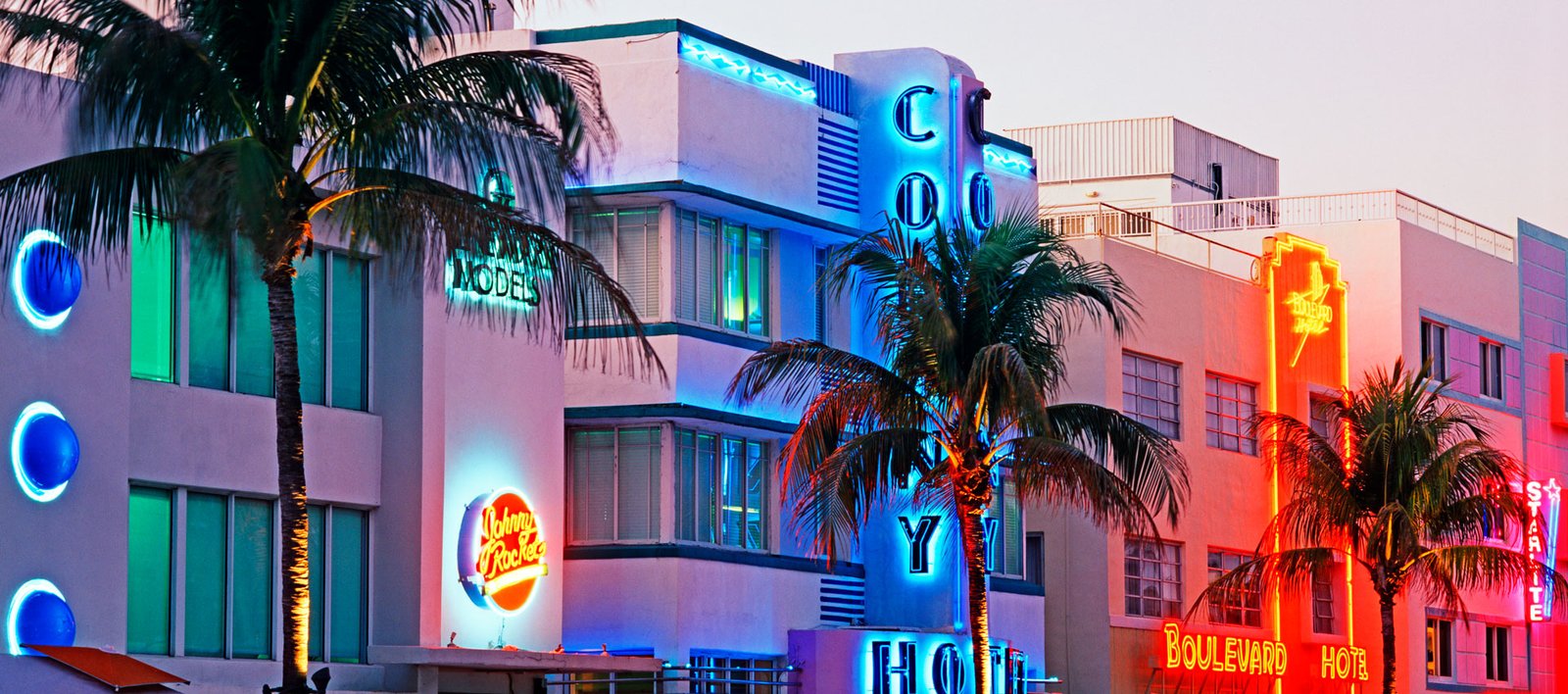
Art Deco may have Parisian roots, but Miami Beach gave it a tan. Here, the style got brighter, breezier, and a lot more fun. Pastel paint instead of polished stone, chrome trim catching the sun, and facades built to shine in the company of palm trees. Around here, they call it Tropical Deco. Whether or not you know the name, you’ve seen it: curved balconies, porthole windows, and signature colors that still glow softly to life at dusk.
The original movement, born in Paris in 1925, was obsessed with progress: sharp geometry, high-end materials, and machine-age glamour. But when it reached Miami Beach in the 1930s, it softened to stucco over marble, mint over monochrome, and curves over corners. Art Deco didn’t lose its edge; it just started dressing appropriately for the weather.
Now, 100 years later, Miami Beach isn’t just celebrating architecture, it’s reminding people who it is.
The programming checks all the boxes (tours, panels, walking exhibits). But like everything in this city, it shows up with sequins, subtext, and main-character energy. It’s smart, theatrical, and unapologetically extra. Think less “preservationist conference,” more Miami Vice meets The Great Gatsby.
The original movement, which emerged in Paris in 1925, was obsessed with progress: precise geometry, luxurious materials, and the glamour of the industrial age; but upon arriving in Miami Beach in the 1930s, it softened: stucco instead of marble, mint green instead of monochrome, curves instead of corners…
It makes sense that Deco thrived here. In the ’30s and ’40s, developers needed buildings that were fast, cheap, and flashy; something modern enough to impress, but flexible enough to adapt to hurricanes and tourists. What they landed on was something in between an ocean liner and a stage set.
Even if you don’t know its name, you’ve seen it: curved balconies, porthole windows, and emblematic colors that still glow softly as evening falls.
The Deco that flourished in South Beach borrowed freely: Mayan ziggurats, Egyptian obelisks, Cubist geometry, and nautical design cues all folded into pastel facades and terrazzo floors. The result is a little dramatic, a little strange, and completely at home under Miami’s sun.
That legacy is most alive in the Art Deco Historic District, where there are more than 800 protected buildings between 5th and 23rd Streets. It’s the largest cluster of Art Deco architecture in the world and one of the few places where you can grab a colada, browse a boutique, or check into a hotel inside a living design archive.
Through January 2026, Lummus Park will be turned into an outdoor museum for 100 Years of Art Deco: A World Celebration, a free, open-air exhibit featuring 100 archival images from across the globe. From Mumbai to Mexico City to Miami Beach, the photos trace the evolution of the movement and its many reinterpretations. It’s a walkable crash course in Deco—and one that makes a case for the style’s enduring influence.
If you happen to be in town January 9 to 11, Art Deco Weekend is the main event. It will be a time-traveling street festival during which Ocean Drive becomes a catwalk for vintage cars, pin-up outfits, jazz bands, and Deco cocktails with extra flair. It’s Miami Beach in full character: educational, over-the-top, and absolutely unbothered by subtlety.
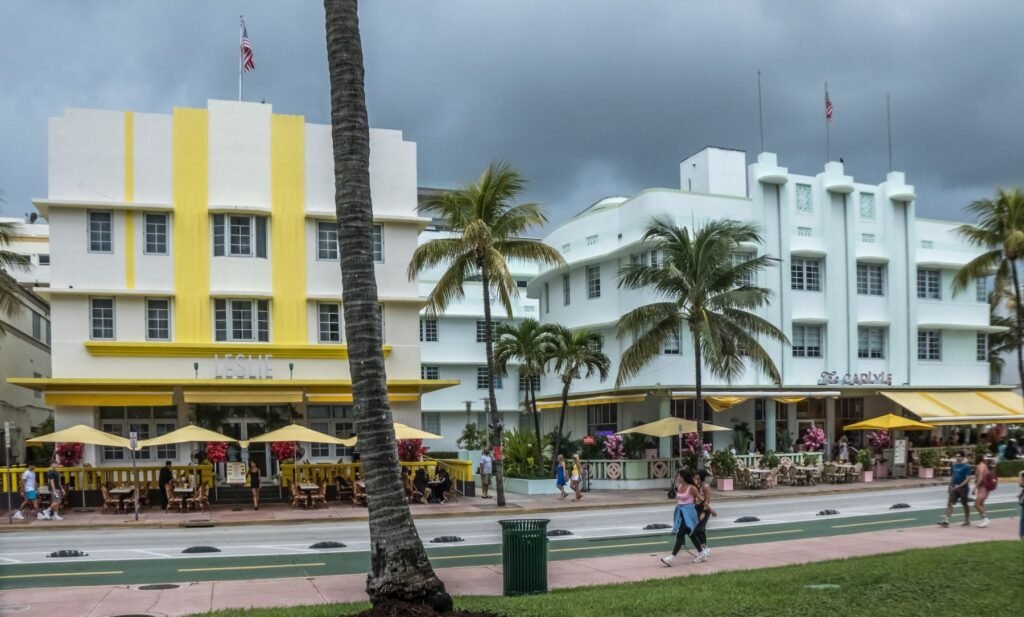
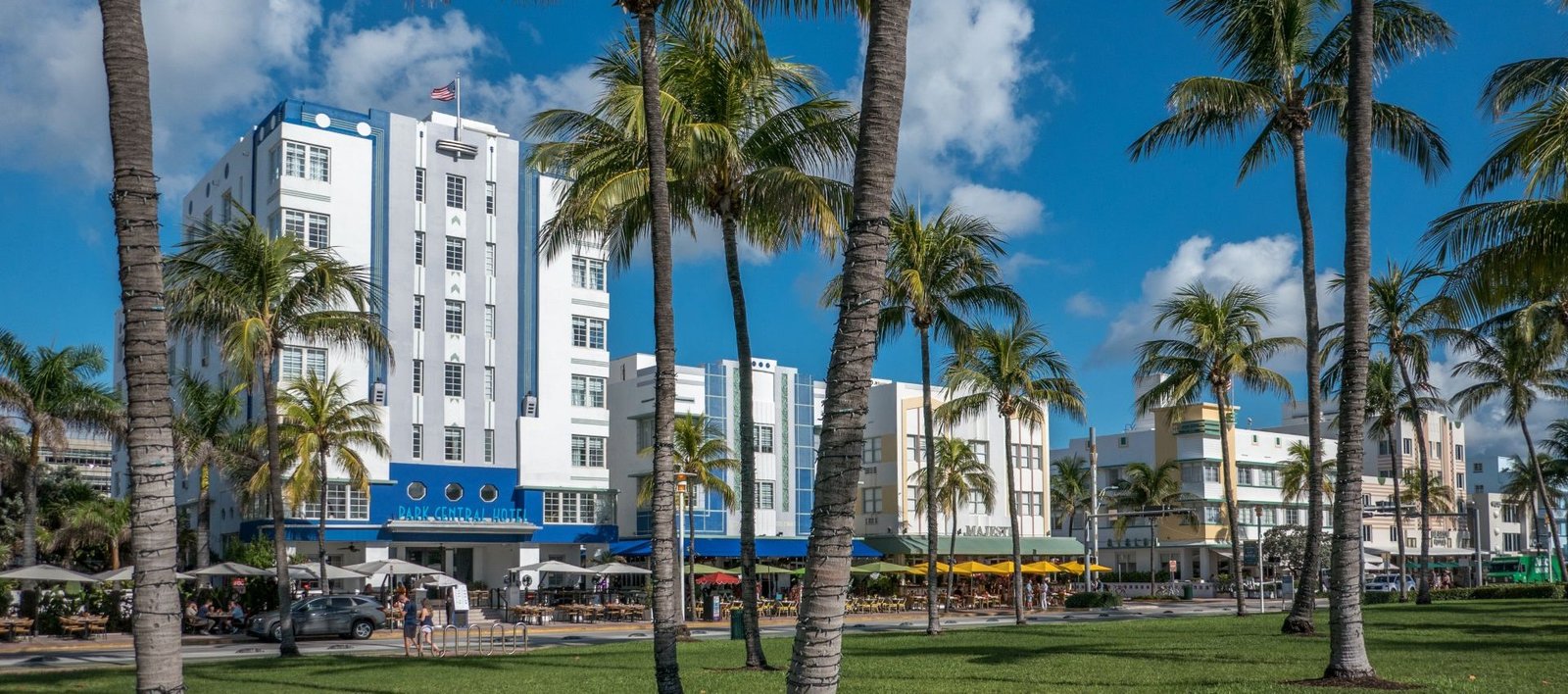
The sidewalks gleam with terrazzo, and each facade looks like an inspiration board: mint green, coral pink, lemon yellow; colors that shouldn’t match, but here they do perfectly.
If you come at another time, it doesn’t matter: the Art Deco District is always there. Consider this an open invitation. Lace up your walking shoes and let Miami Beach’s Art Deco District show you what happens when architecture decides to flirt. Just remember: in South Beach, architecture isn’t just scenery. It’s the set you walk through. Start your visit at the Art Deco Welcome Center. The Miami Design Preservation League runs daily walking tours that dish out history, drama, and the preservation saga that almost wiped this whole district off the map in the 1970s. (Spoiler: Developers nearly got their way, but a handful of locals fought back, and their win helped redefine what cultural preservation looks like in Miami.)
The art deco style that flourished in South Beach borrowed freely: Mayan ziggurats, Egyptian obelisks, cubist geometry and nautical touches, all integrated into pastel facades and terrazzo floors.
Or start at 7th and Ocean, where the breeze mixes salt and sunscreen, and the buildings look like they were created by a set designer with a pastel obsession. The sidewalks shimmer with terrazzo and every façade feels like a mood board: mint green, coral pink, lemon yellow—colors that shouldn’t work together but here absolutely do.
You pass the Colony Hotel, its neon sign buzzing softly in the daylight. Peek into the lobby where Scarface nostalgia meets speakeasy chic. Ahead, chrome trim catches the sun like jewelry, and curved balconies lean out like they’re posing for a photo.
Looking for something slower-paced? Head north. North Beach has its own take on Deco, anchored by the Miami Beach Bandshell, a MiMo-era amphitheater that hosts live concerts, global music events, and open-air movie nights. Less neon, more locals. Still fabulous.
Yet beneath the sequins and centennial fanfare, a quiet urgency hums through the Art Deco District. Recent proposals in the Florida legislature could override local preservation controls, allowing developers to demolish historic buildings labeled “unsafe,” even if they’re architecturally significant. Preservationists, led by the Miami Design Preservation League, are pushing back hard and reminding city officials that these buildings aren’t just relics. They’re the soul of Miami Beach.
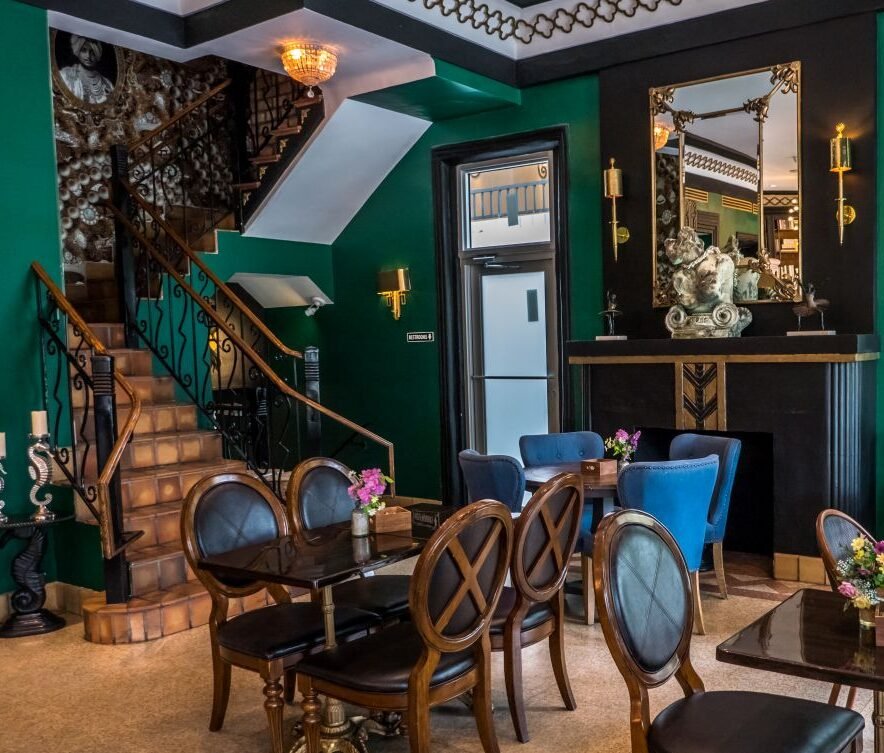
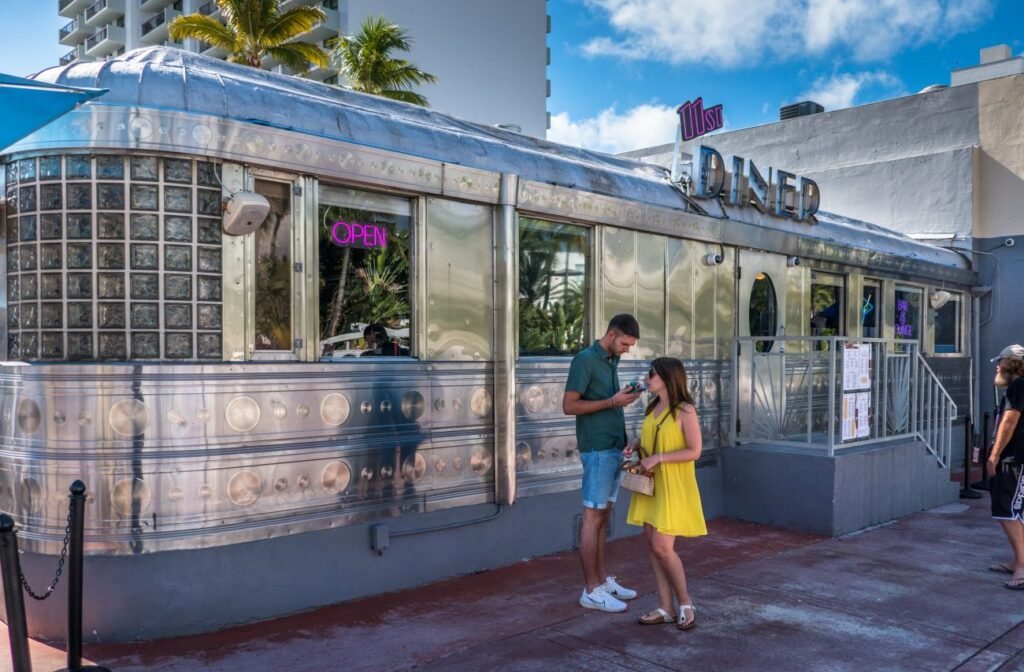
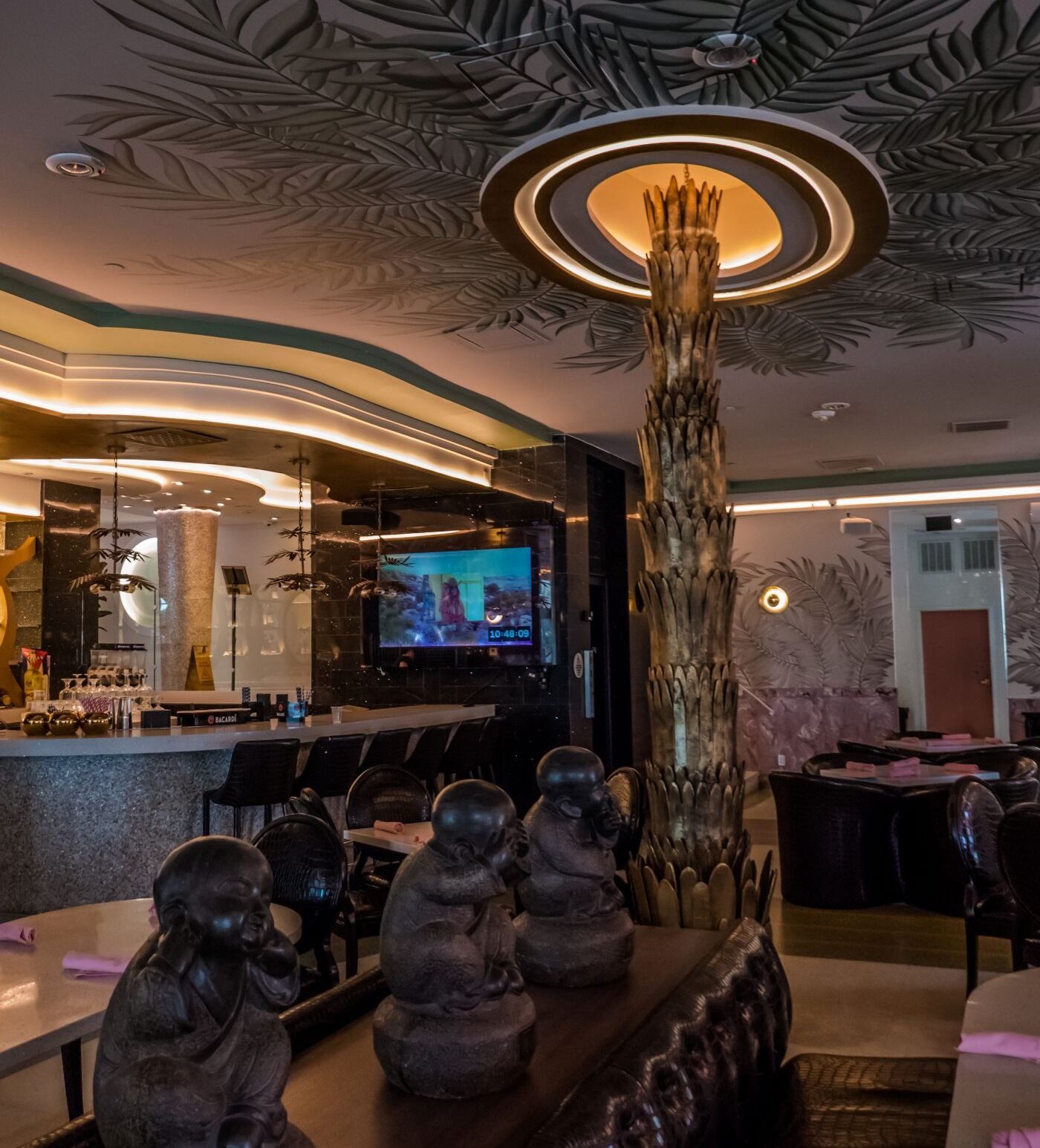
You’re inside a time capsule: art deco typography, mirrored walls, and furniture that
whispers of Miami’s old glamour.
Many of these iconic facades still stand proud. But the conversation isn’t over. If the last century has proven anything, it’s that Miami Beach has never seen Art Deco as old. It sees it as essential. So this centennial is more than a look back. It’s a reminder of what makes the city shimmer, and what’s still worth fighting for.
Architectural roots and patterns
In the 1930s, Miami Beach was a fledgling tourist town recovering from economic collapse and the devastation caused by the 1926 hurricane. Despite the Great Depression, its permanent population grew rapidly, fueled by affordable package tours and a middle class eager to vacation in the tropics.
The city’s modest scale, strict building codes, and emphasis on low-rise buildings created fertile ground for a new architectural expression. It was in this context that Henry Hohauser and L. Murray Dixon emerged, two architects who reinterpreted International Art Deco in a regional language of stucco, limestone, and streamlined geometry.
Hohauser, formado en el Instituto Pratt, diseñó más de trescientas estructuras, entre ellas los hoteles Cardozo, Colony, Essex House y Park Central. Dixon, oriundo de Florida y educado en Georgia Tech, favorecía la simetría, las esquinas curvas y los motivos náuticos. Sus hoteles Senator y Tiffany ejemplifican la estética estilizada del distrito.
Décadas más tarde, Barbara Baer Capitman consagró su legado. Su campaña de preservación en los años 70 redefinió estos edificios como activos culturales esenciales.
Para una estadía inmersiva, alójese en uno de los hoteles de época deco
The Carlyle1250 Ocean Dr. Dating back to the 1930s, this white stucco icon features elegant curves, vibrant neon, and “eyebrow” windows. It appears in Scarface y The Birdcage. |
The Colony Hotel736 Ocean Dr. Opened in 1926, it features vertical stripes and glowing blue-red neon. |
The Marlin Hotel1200 Collins Ave. Dating from 1937, this building in pastel peach tones stands out for its porthole windows, rounded edges and neon sign. |
The Breakwater Hotel940 Ocean Dr. Built in 1936, this bold structure with its central tower and vibrant neon lights was restored in 2011. It is the visual heart of the strip. deco on Ocean Drive. |
The Raleigh Hotel1775 Collins Av. Built in 1940, it is famous for its curved swimming pool. It is known as the “grand dame” of the Art Deco in South Beach.
|
Leave a Reply