

The Biomuseum
- January 6, 2026
Photos: Javier Pinzón
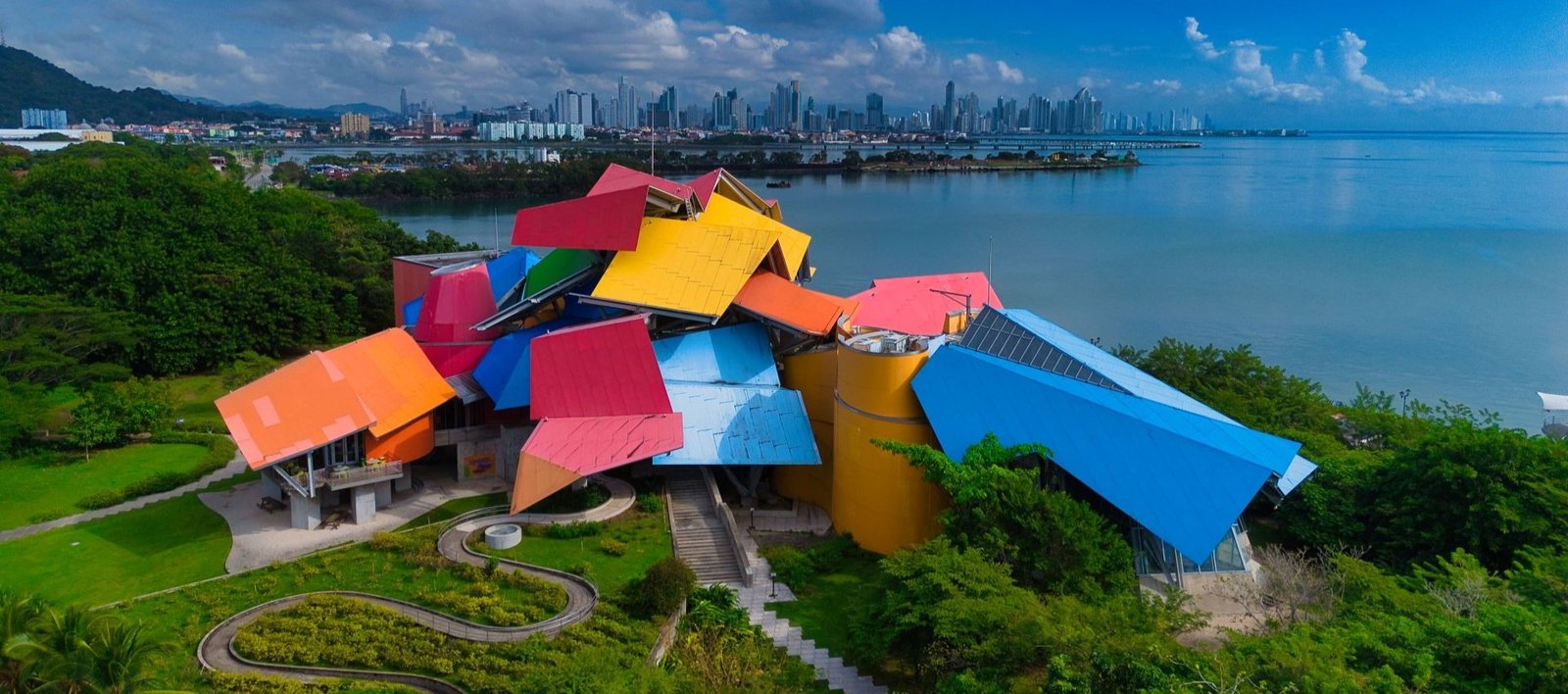
The Biomuseo is not just one of Panama’s most striking buildings. It is a declaration of identity, biodiversity, and national pride, conceived by one of the world’s most influential architects: Frank Gehry.
How did Gehry arrive in Panama and how did they manage to involve him in such a project?
The connection was deeply personal. Gehry had been visiting Panama since the 1970s thanks to his wife, Berta Isabel Aguilera, who was Panamanian. These frequent trips allowed him to get to know the country beyond its tourist attractions: its culture, its people, and its landscapes.
Following the global impact of the Guggenheim Museum Bilbao in 1997, Panama sought to invite him to leave his mark on the isthmus. It wasn’t easy: Gehry was at the peak of his career. But the persistence of his inner circle and a group of committed Panamanians made it possible for him to accept the challenge in 2000.
Un proyecto que lo conectó aún más con el país
At first, Gehry hesitated. Panama was his personal refuge, a place to disconnect from work. He feared that designing here would rob him of that peace. Paradoxically, the project ended up deepening his connection to the country, transforming that refuge into a work that now belongs to everyone.
The Biomuseo: when Panama inspired Frank Gehry
What does the design of the Biomuseo represent?
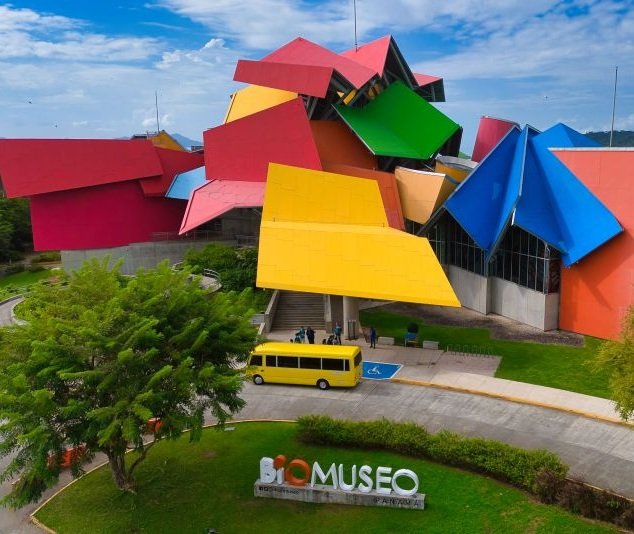
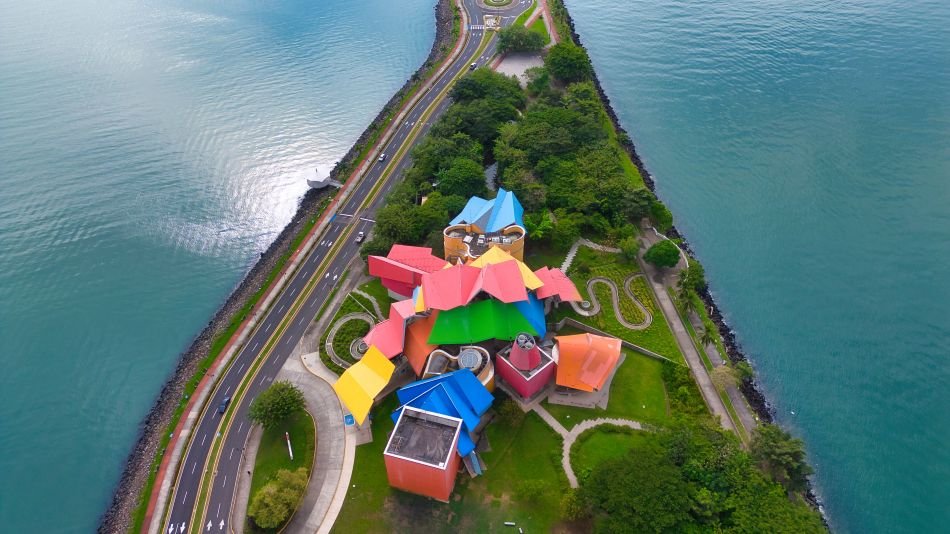
The building is an architectural metaphor for Panama. Its soaring structure, large openings, and roofs with wide eaves reinterpret traditional tropical architecture.
The columns evoke tree trunks, the beams branches, and the overlapping roofs the forest canopy. The vibrant colors are not an aesthetic whim: they represent Panama’s biodiversity—birds, fish, corals, and plants—and also the country’s cultural richness, visible in its traditional costumes, crafts, and artistic expressions.
A scientific narrative built over more than 100 years
The content of the Biomuseo is based on more than a century of scientific research, led by institutions such as the University of Panama and the Smithsonian Tropical Research Institute.
From the first scientific expeditions in 1910 to the great discoveries about the formation of the isthmus in the 1970s and 1980s, Panama became a key point for understanding the natural history of the planet.
This story was made possible thanks to the work of scientists such as Anthony Coates, Richard Cooke and George Angehr, along with international and local teams of architects, designers, engineers and builders who worked for more than ten years to make it a reality.
What does the Biomuseo mean for Panama today?
The Biomuseo is an affirmation of who we are. It reflects a country’s effort to know itself, value itself, and build itself up based on respect for diversity and conservation.
Educational: It creates citizens who are more aware and committed to their environment.
Social: it unites us around a common history and celebrates our differences.
International: projects Panama as a nation that values knowledge, culture and global responsibility.
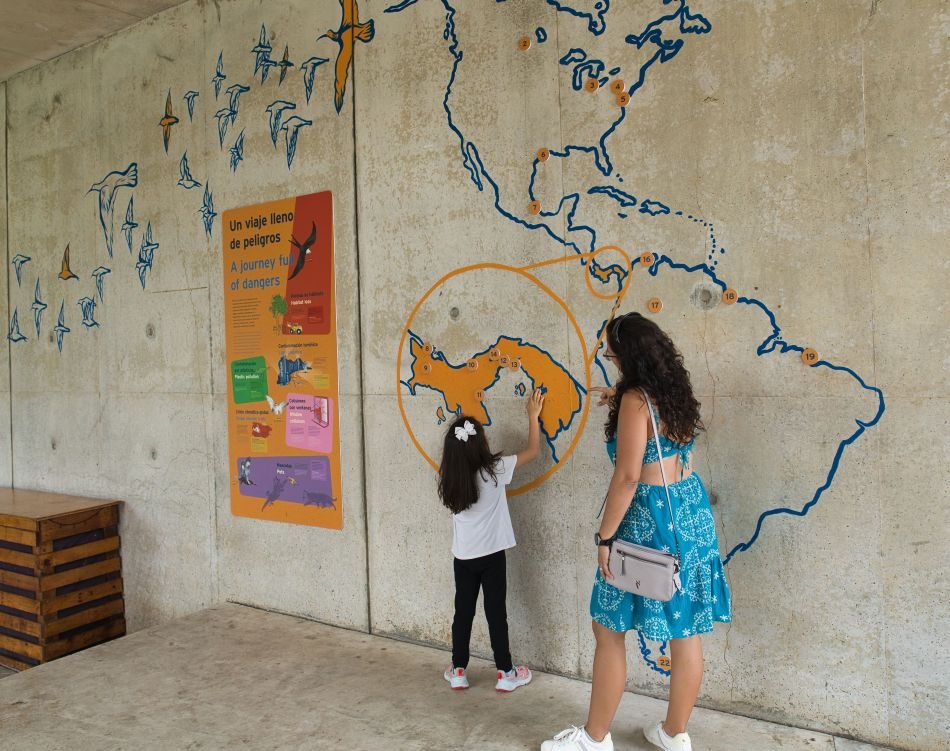
More than a museum, the Biomuseo is proof that Panama not only connects oceans: it connects stories, science, culture and the future.
8 facts about the Biomuseo
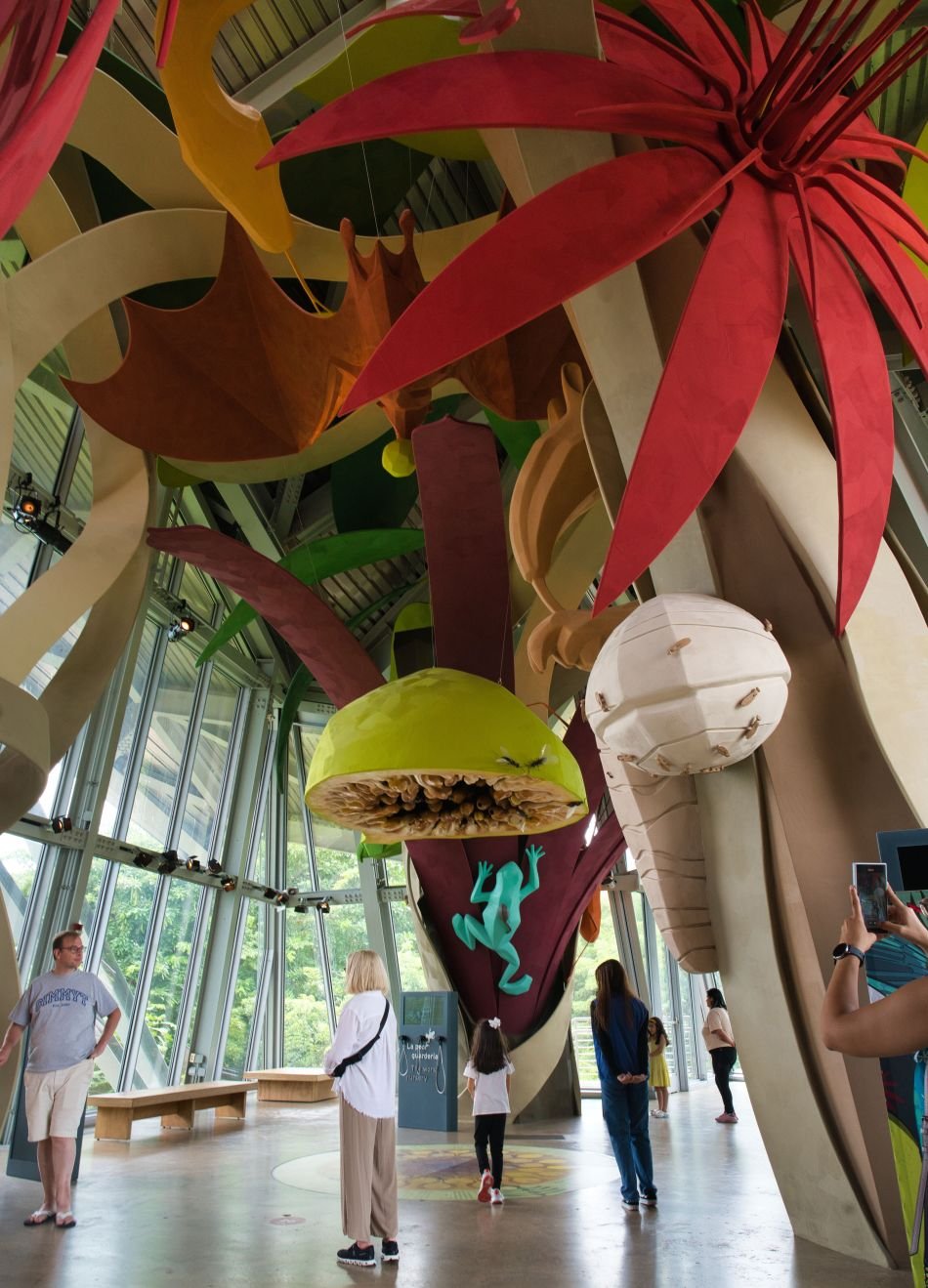
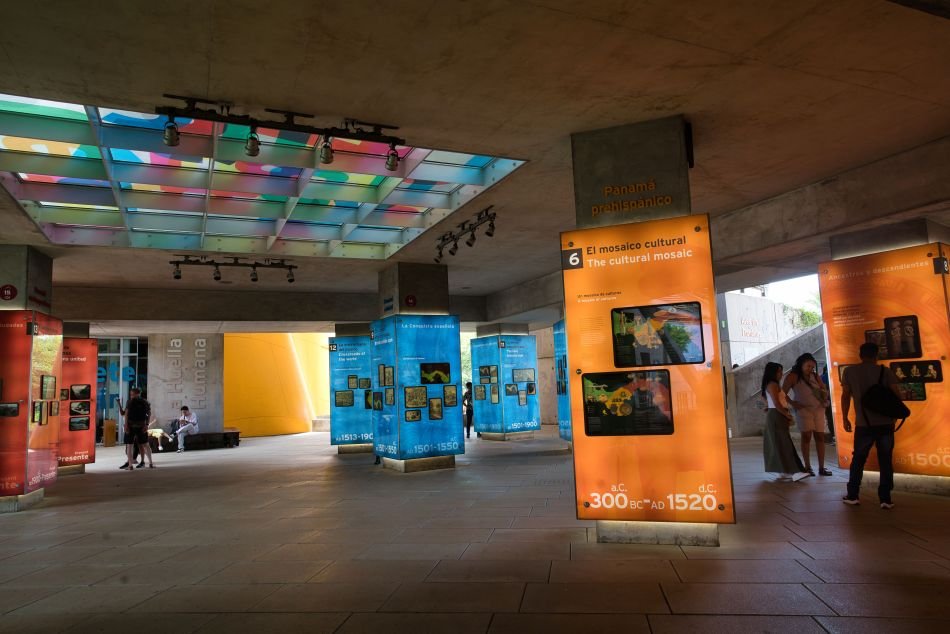
- The Biomuseo tells, in nine rooms, the story of the emergence of the isthmus from the bottom of the seas and the global consequences of having joined the land and separated the oceans.
- With life-size sculptures, it shows the great exchange of fauna that occurred when the land bridge between North and South America was created.
- Two cylindrical aquariums showcase the differences in fauna between the Pacific and the Caribbean.
- The Biodiversity Park, which surrounds the museum, extends the narrative of the exhibit to the surrounding landscape, with educational stations that illustrate the interaction between local plants and animals.
- The Biomuseo receives approximately 200,000 visitors annually: 40% foreign and 60% domestic. Around 50,000 are students from all over the country.
- Since 2021, it has produced traveling exhibitions, manufactured in a modular way to facilitate their transport to different points in the country.
- Some of these traveling exhibitions are Extinction, about the current biodiversity crisis; The Forests of Darien, focused on the natural wealth of the biogeographic Darien; and Mangroves: allies against climate change.
- The museum has developed digital content for Instagram, YouTube, Facebook, TikTok and X, platforms that allow it to reach a community that transcends borders.






Leave a Reply