The People of the River
- March 9, 2026
By Julia Henríquez
Photos: Demian Colman and Javier A. Pinzón
The short distance that separates the modern buildings of Panama City from the Emberá communities along the Chagres River leads not only to a different landscape, but above all to another dimension. The inhabitants of the villages of Tusipono and Purú Baikirú show us the way.
Step into the heart of Chagres National Park and meet the Emberá community, a people who have preserved their traditions, language, and identity.
Between rivers and jungle: arrival at the heart of the Emberá Chagres.
For much of the year, the days in Panama are marked by rain, though not as a sentence. Rather, it is an invitation to experience time in another way, to discover the true green of the forest and, hopefully, to meet—and respect—those who inhabited it long before us. We chose November for this journey and, as expected during that season, a storm welcomed us upon arriving at Chagres National Park.
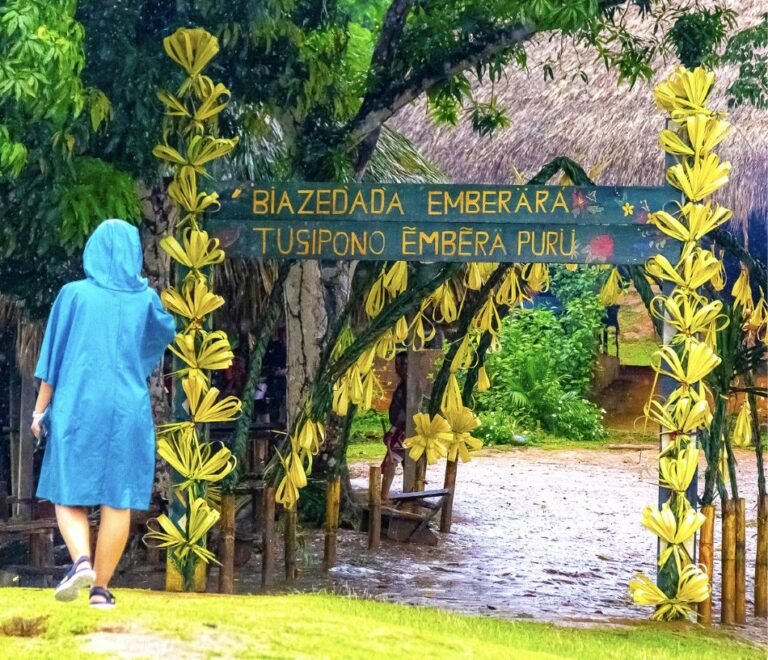
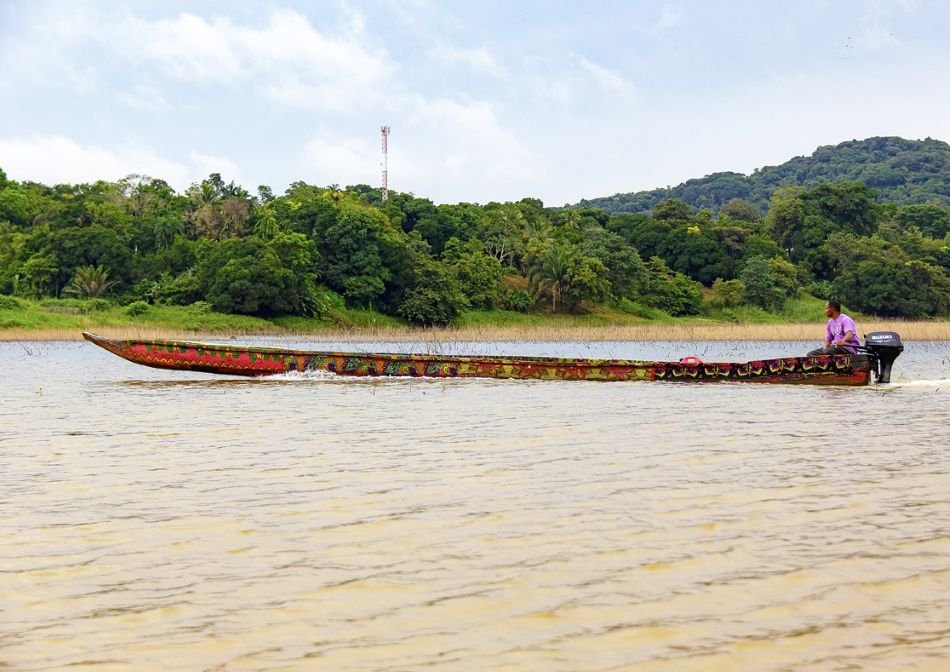
After a short trip against the current, a wooden arch announces our arrival at Biazedada Emberara Tusipono Emberä Purú.
The Chagres is a strategic reserve: the water balance of the Panama Canal and the daily life of the capital depend on its rivers and forests. But that day we did not come to measure river flows or hike trails. We came to meet those who live along these riverbanks: the Emberá community, a living and successful example of the struggle for territory carried out by the Indigenous peoples of the Americas.
A journey through the heart of the Emberá community.
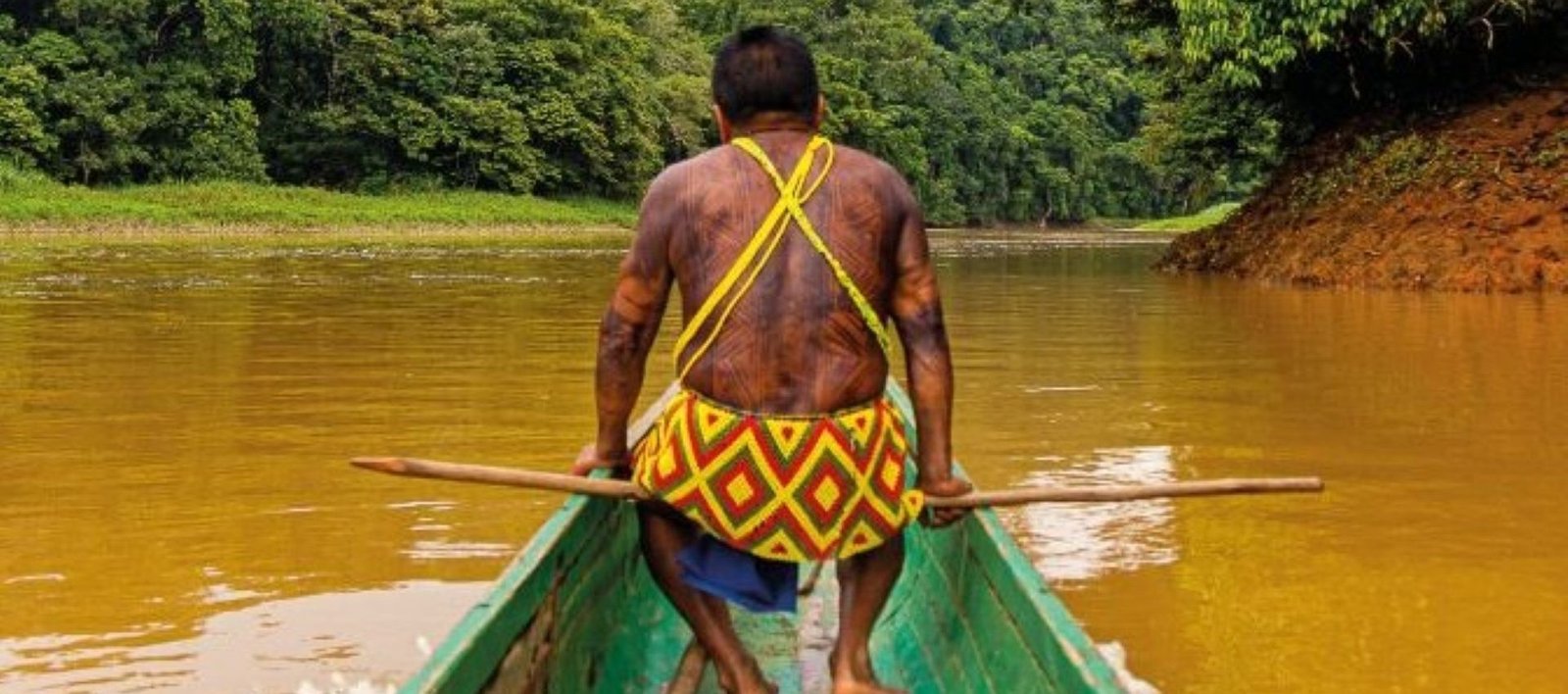
Under the rain we crossed the checkpoint of the Ministry of Environment to register our entry and arrived at the port of Corotú. The journey begins upstream. The boat is traditional, though powered by a motor. Yet any hint of modernity fades when our guide stands up, paddle in hand, dressed in traditional attire. The simple yet firm gesture places us immediately in the reality we are about to encounter.
A people telling their story.
The rain seems to grant us a pause, and the community welcomes us with music.
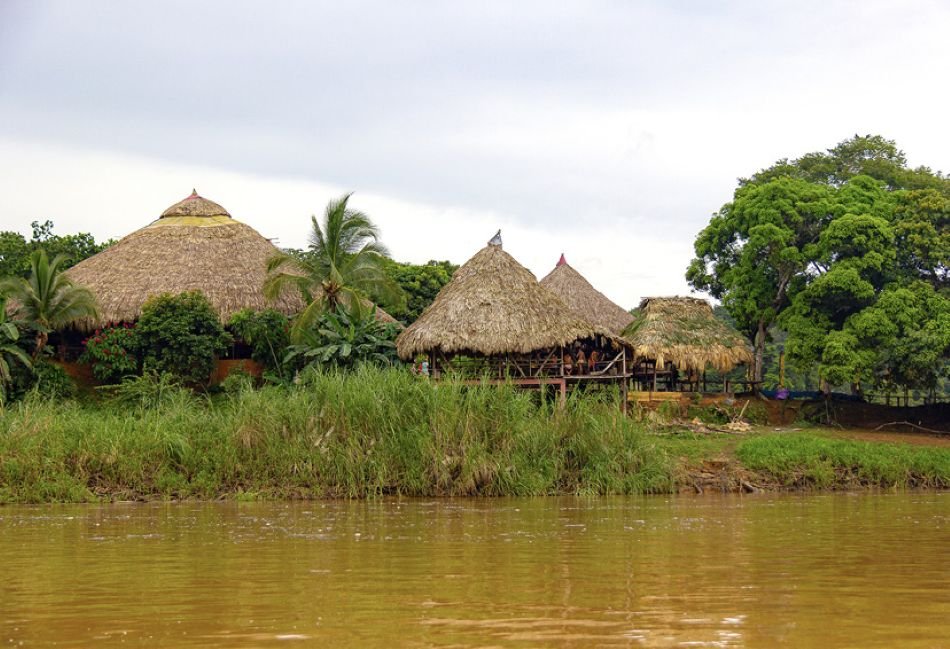
Wooden houses rise on tall stilts to protect them from the river’s floods. Thatched roofs shelter us from a few stubborn raindrops that insist on giving the day a gray palette. Little by little, however, color prevails. We enter a large hall with a high ceiling and take our seats. At the back, the fire pit already announces lunch.
The talk begins with a greeting in the original language, and then our guide and tourism leader asks:
“Did you understand me?”
The message is clear. We are in their home, and she decides to adapt to our language to tell us the story of her people. The Emberá originate from the Darién region. There, two sister communities lived together: the Emberá and the Wounaan. After the conquest and subsequent territorial divisions, both peoples became deeply fragmented and chose to work together to achieve the cultural, administrative, and territorial autonomy that is now expressed through their comarcas.
Nothing was simple. The economic, social, and migratory conflicts that have historically shaped the border between Panama and Colombia soon made themselves felt. Added to this was the distance from healthcare services and limited access to modern medicine, which led several families to migrate in search of new horizons.
The Emberá journey toward a new way of life.
Thus, in the 1970s, the first Emberá families arrived in the Chagres region. They sought an environment similar to the one they had known for generations: a river for transportation and food, land to cultivate, and space to build their homes. After a period of adaptation, new challenges emerged. The area was declared a National Park, and the founding families were no longer allowed to hunt, farm, or use the forest’s timber. Once again, their way of life had to transform. Once again, their way of life had to transform.
It was then that community leaders designed a new strategy to guarantee balance and stability for future generations: opening the doors of the community to those who wished to understand what it means to be Indigenous in contemporary America.
Without abandoning their worldview, but drawing closer to the country’s urban dynamics, the Emberá-Wounaan communities of the Chagres began to develop tourism. Farming gave way to guided tours, and hunting to conversation.
United to protect biodiversity.
In September 2025, the international community reached a historic milestone: the Agreement on the Conservation and Sustainable Use of Marine Biodiversity in Areas Beyond National Jurisdiction (BBNJ) surpassed the 60 ratifications required to enter into force on January 17, 2026.
For the first time, the world will have a legally binding framework to protect marine biodiversity on the high seas, a region that covers nearly half of the planet.
Our guide tells us with quiet pride that she belongs to one of those founding families and has witnessed the growth of this tourism project, which today sustains all the families living in the territory. The story repeats itself in Purú Baikirú, which we visit on a second day, and in each of the villages of the Chagres.
“The gastronomy of a community with deep traditions.”
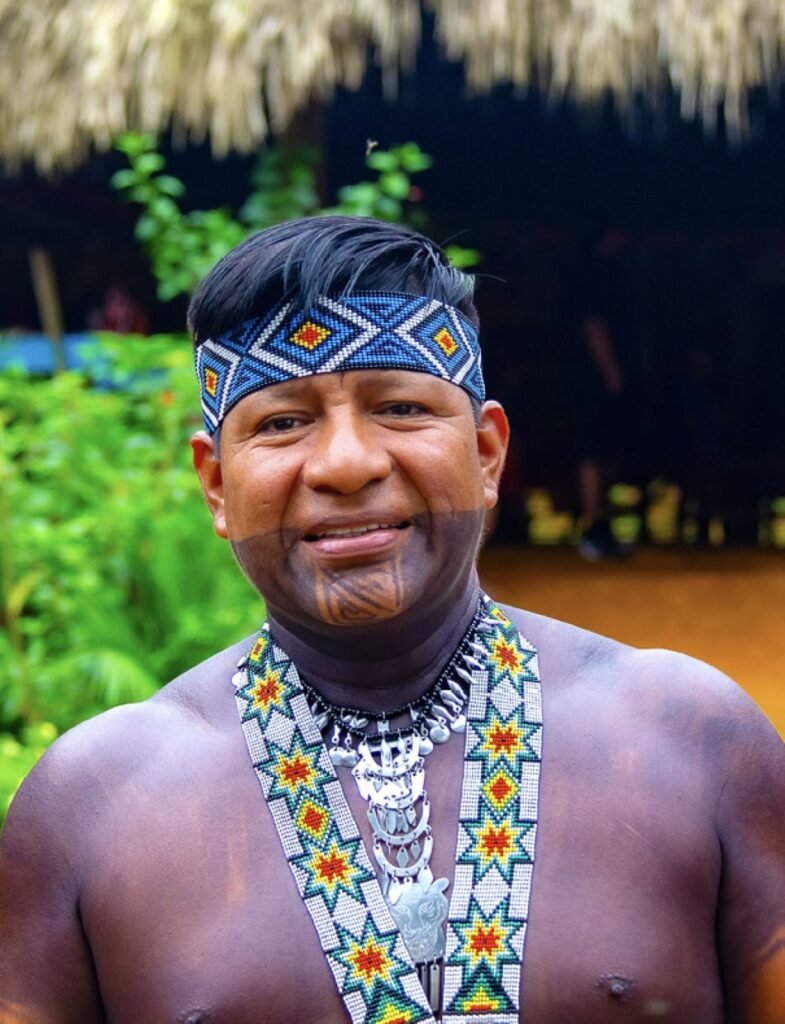
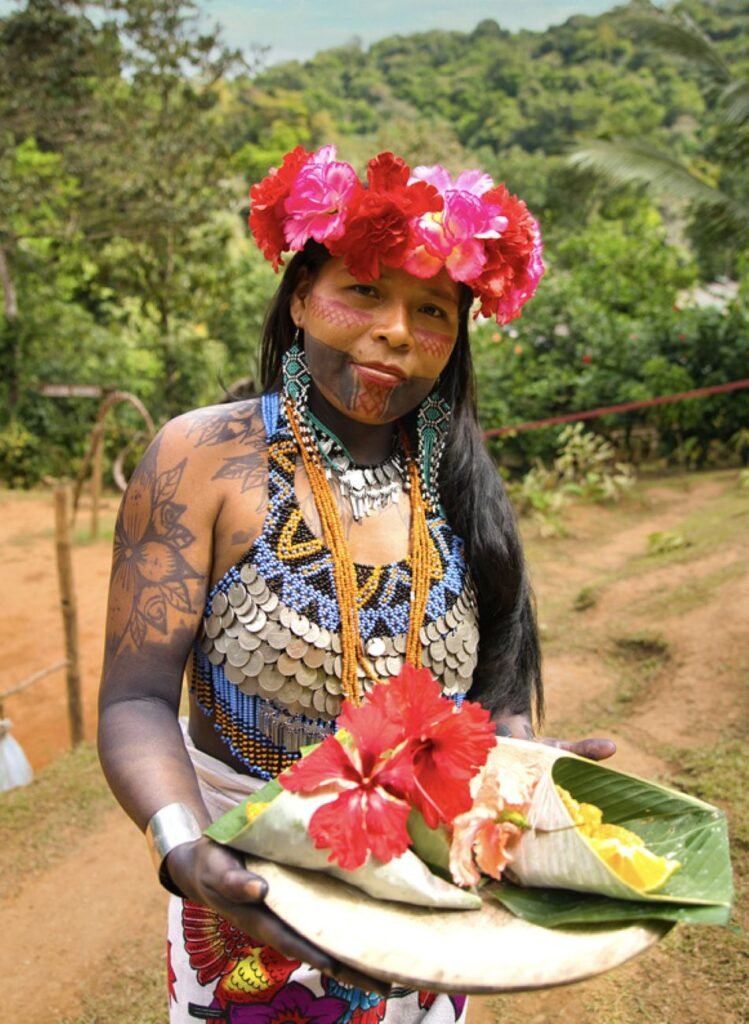
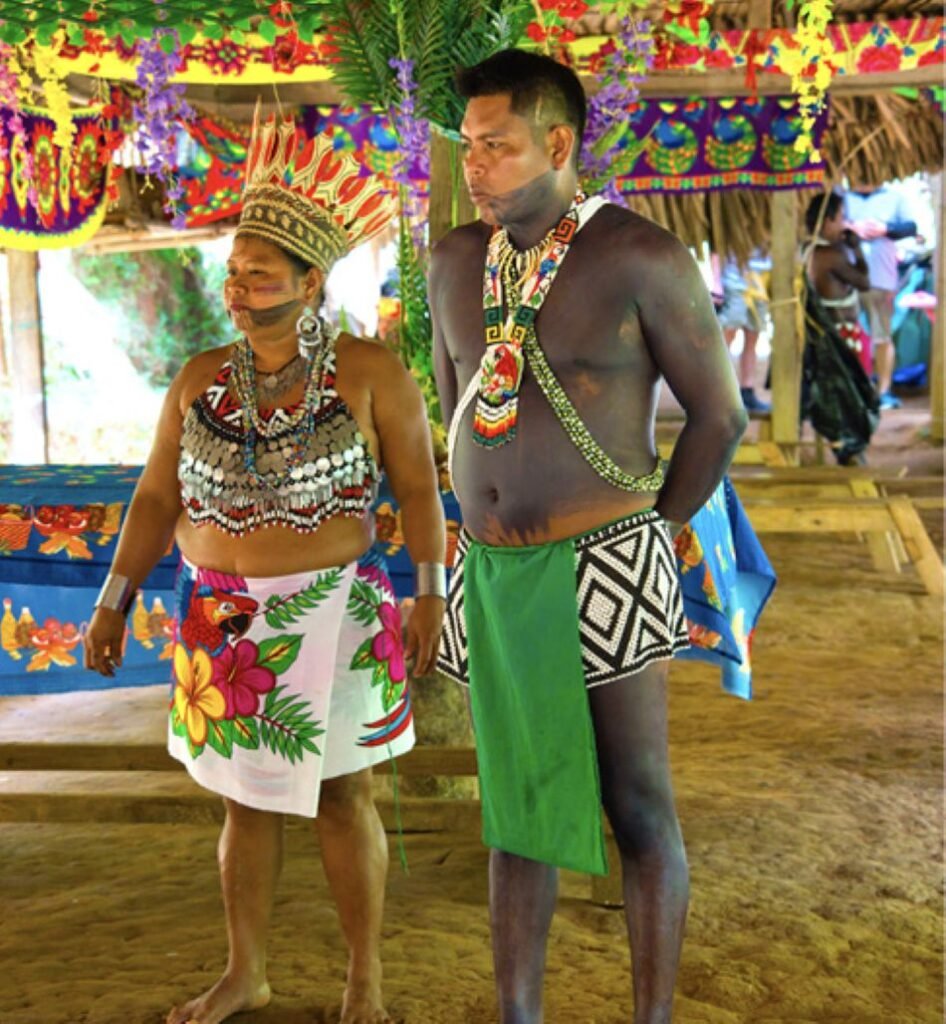
They speak about the change in customs and what it means to live within a national park. Today they purchase supplies in the city and their children attend public schools. Yet here, in the middle of a lush and humid landscape, traditions remain: the original language is spoken, cooking is done over fire, and otapas and okamas are worn—beaded necklaces that tell stories of life, status, and roles within the community.
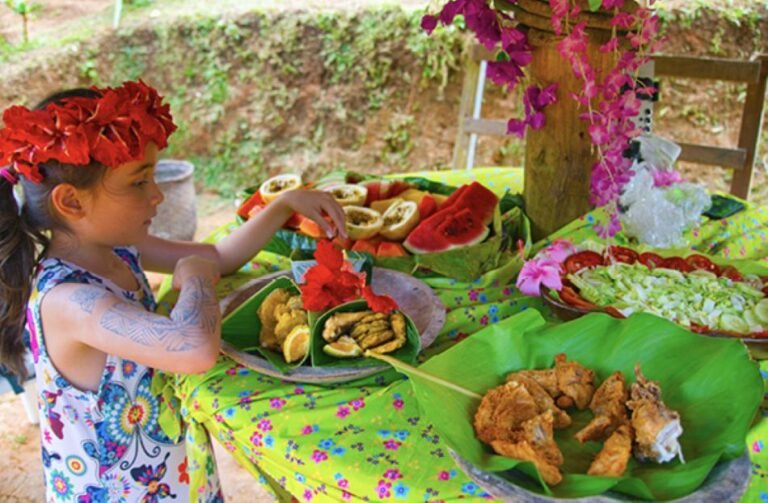
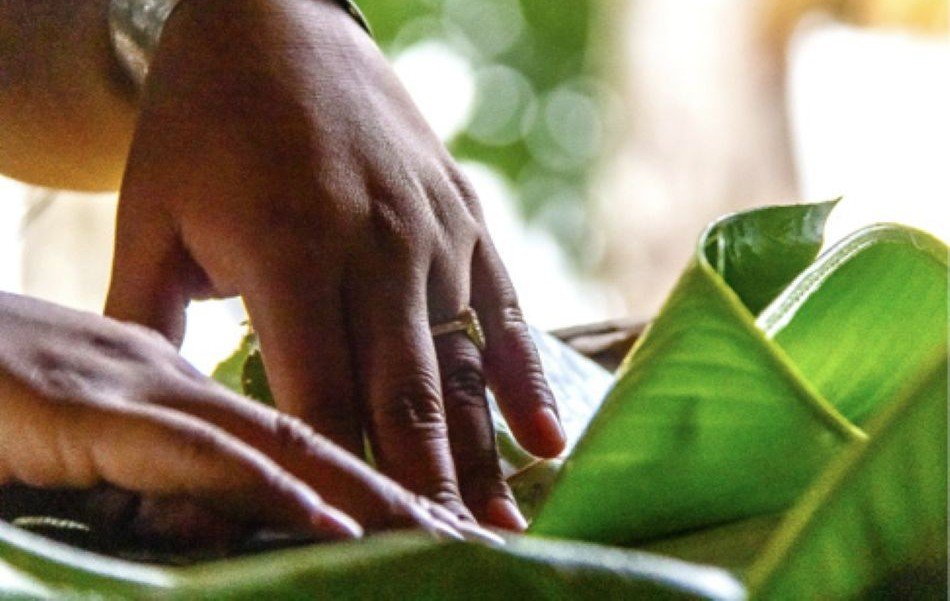
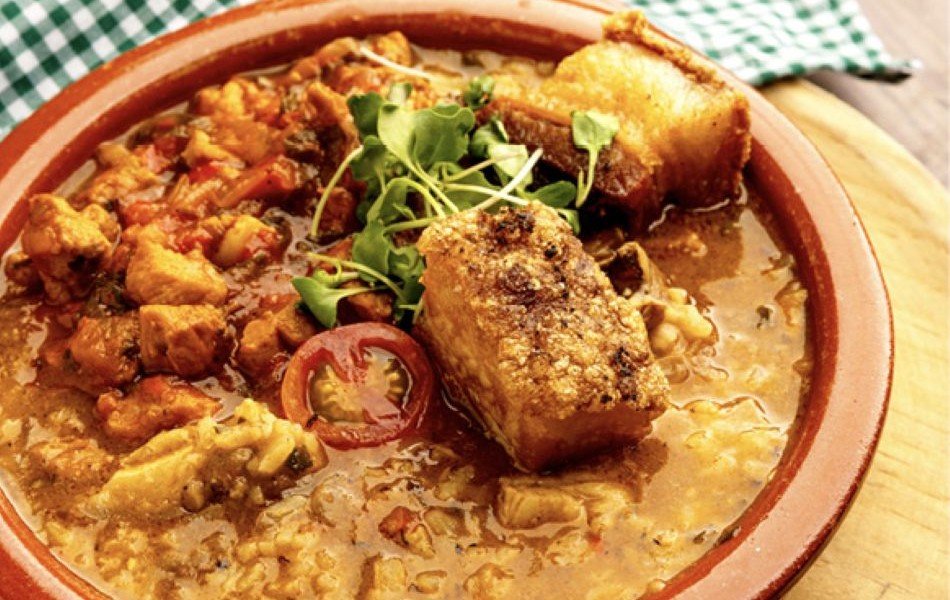
The cooks have already done their part. Wrapped in plantain leaves and served on wooden trays, the meal arrives: fried fish with patacones. Products from their surroundings, fresh and without artifice. As we eat, they explain that here everything returns to nature: nothing is wasted or contaminated. We are not only in an Indigenous community; we are inside a National Park. Flavors that tell the story of a community’s traditions.
Here, traditions endure: the ancestral language is spoken, meals are cooked over open fire, and stories are woven into every necklace.
The cooks have already done their part. Wrapped in plantain leaves and served on wooden trays, the meal arrives: fried fish with “patacones”. Products from their surroundings, fresh and without artifice. As we eat, they explain that here everything returns to nature: nothing is wasted or contaminated. We are not only in an Indigenous community; we are inside a National Park.
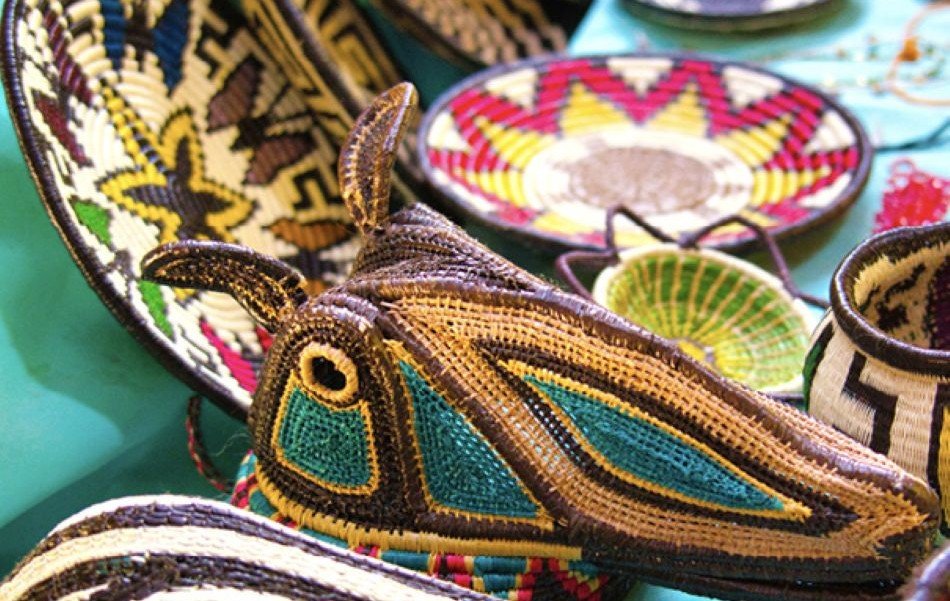
After lunch, music fills the space again and we are invited to the communal hall to learn about their crafts. Baskets, bowls, plates, and masks woven from natural fibers, dyed with pigments extracted from plants; delicate carvings in cocobolo and tagua that replicate the surrounding jungle. This is not merely a craft fair. It is a form of expression, a transmission of knowledge, and a generational effort to preserve identity.
“Their tattoos tell the story of who they are; their music reminds us that we can all celebrate together.”
To understand it — and, above all, to protect it.
Here we also receive natural tattoos, now almost ritual gestures shared with visitors. The designs that adorn the skin of the Emberá-Wounaan were once clothing, protection, and identity long before textiles and beads arrived.
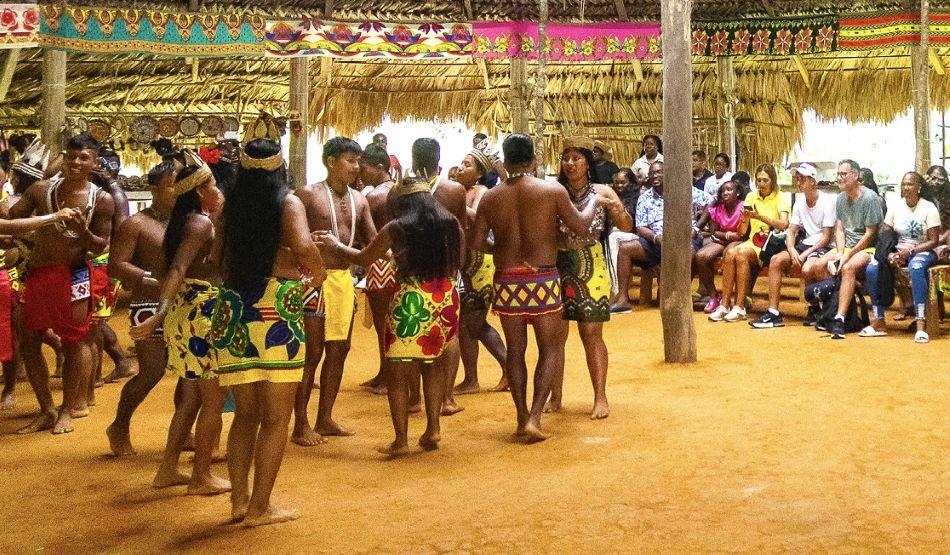
The day ends in celebration. The sound of traditional handmade instruments encourages us to move our feet following newly learned steps. For a moment, the languages that separated us dissolve, leaving only laughter and cheers. Arms and feet of different tones move to the same rhythm.
A wonderful experience.
Before leaving, I speak briefly with the cacique.
Are you not afraid that your people might lose their identity and become just an attraction?
“No,” he replies without hesitation. “If you are born Emberá, you never stop being Emberá. The new generation grew up close to Latin culture, used Spanish almost as their first language, changed their clothing, and studied in public schools. But they returned. Here they are.
They returned to contribute what they learned outside and continue building an identity that now sends a clear message: We are here. We exist. We matter.
Leave a Reply